
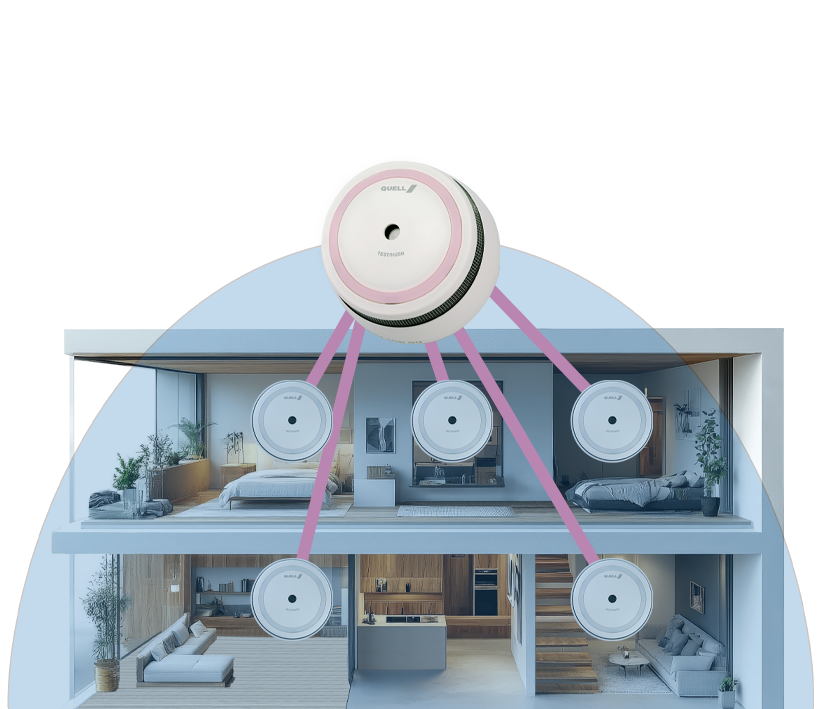
Short answer: if a smoke alarm sounding in one part of your home might not be heard elsewhere, it’s worth considering an interconnected system.
Most people assume that if a smoke alarm sounds, everyone in the house will hear it. Unfortunately, that’s not always the case.
If a fire starts in the garage while your family is asleep, the nearest smoke alarm will sound first. In a larger home, however, that warning may not be heard straight away, especially if bedrooms are located on another level or at the other end of the house.
That’s where interconnected smoke alarms can help.
When one alarm detects smoke, every connected alarm sounds, helping ensure everyone hears the warning no matter where they are in the home.
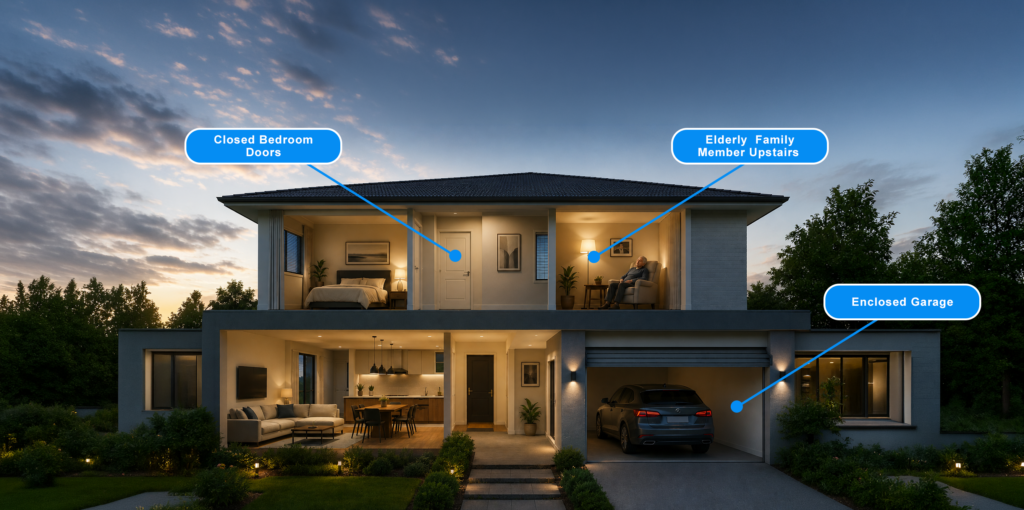
Could your home benefit from interconnected smoke alarms?
Every home has a different layout. While some homes make it easy to hear a smoke alarm from almost anywhere, others have bedrooms, living areas and garages spread further apart, making early warning even more important.
A quick self-check:
- Does your home have more than one storey?
- Do you have bedrooms located away from your main living areas?
- Do people sleep with bedroom doors closed?
- Would you hear a smoke alarm in the garage if you were asleep in your bedroom?
- Do you have a laundry, garage or another area separated from the rest of the home?
- Do elderly family members live in the home?
- Do people with hearing impairments live in the home?
If any of these sound familiar, interconnected smoke alarms are worth considering.
How do alarms connect?
There are two main ways smoke alarms can be interconnected: wireless and hard-wired.
Wireless interconnected alarms
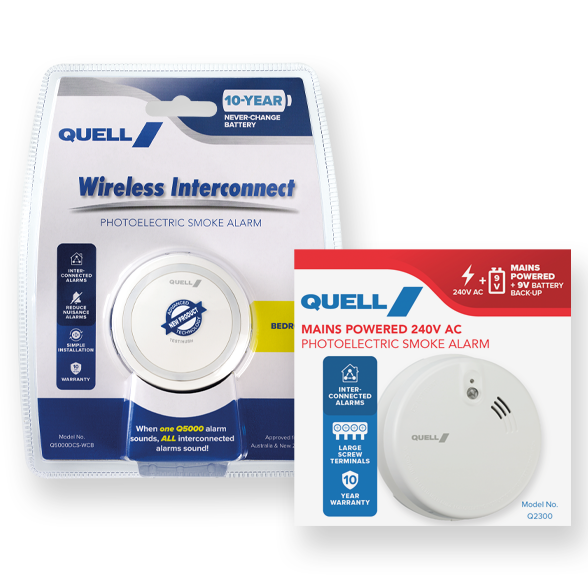
Wireless alarms communicate using radio frequency (RF) technology. When one alarm detects smoke, it sends a signal to the other alarms in the home, causing them to activate as well.
Because they don’t require any wiring between alarms, they’re a popular choice for existing homes and come in both Battery and Mains Powered variants.
Good to know:
- No wiring between alarms
- No Wi-Fi required
- Suitable for existing homes
- Main Powered models should always be installed by a licensed electrician.
Hard-wired interconnected alarms
Hard-wired alarms are connected to the home’s electrical wiring and interconnected via a dedicated wire between each alarm, allowing all alarms to sound when one detects smoke. They’re commonly installed in new homes and major renovations, and installation must be completed by a licensed electrician.
Which option is right for you?
If you’re upgrading the smoke alarms you already have, and they are mains-powered, you will need to replace your alarms with mains-powered alarms.
A wireless interconnected system is often the easiest place to start when creating a new interconnect network, as there is no need to run cables through walls or ceilings, and you can easily expand the system later if your needs change. Adding an extra bedroom, converting the garage or creating a home office? Additional wireless alarms can simply be connected to the existing network, helping you extend protection as your home evolves.
If you’re building a new home or undertaking a major renovation, a complete hardwired or combination of hardwired and wireless may be suitable. With electrical work already being carried out, it’s a convenient time to install interconnected protection throughout the home. These systems connect to the home’s mains power and should be installed by a licensed electrician.
The bottom line
Do you need interconnected smoke alarms? If your home has areas where a smoke alarm might not be heard straight away, they’re certainly worth considering.
The whole point of a smoke alarm is to give you and your family time. Time to wake up, time to react and time to get out safely. The sooner you hear the warning, the sooner you can act.
Requirements can vary depending on where you live, so it’s always worth checking your local smoke alarm regulations when upgrading or installing new alarms. Interconnected smoke alarms are already required in some situations and are becoming increasingly common in homes across Australia.
In Queensland, all private homes, townhouses and units will need interconnected photoelectric smoke alarms from 1 January 2027. Requirements vary across Australia, so check the current rules in your state or territory.
Because when it comes to fire safety, a few extra seconds can make all the difference.
To learn more, explore Quell’s range of interconnected smoke alarms, browse the FAQs or visit the Video Library for practical advice on choosing, installing and maintaining your smoke alarms.
Frequently Asked Questions
How many interconnected smoke alarms do I need?
The right number depends on the size and layout of your home. For the best level of protection, smoke alarms should be installed in bedrooms, hallways connecting sleeping areas and on every level of the home.
Can interconnected smoke alarms be installed in an existing home?
Yes. Many interconnected smoke alarms are available as wireless models, making them suitable for existing homes without the need to run cables through walls and ceilings.
What’s the difference between wireless and hard-wired interconnected alarms?
Wireless interconnected alarms communicate using radio frequency technology and don’t require wiring between alarms. Hard-wired alarms are connected through the home’s electrical wiring and are commonly installed in new homes and major renovations. Hard-wired systems should be installed by a licensed electrician.
Can I install wireless interconnected smoke alarms myself?
Many wireless interconnected smoke alarms are designed to be easy to install and don’t require wiring between alarms. Always follow the manufacturer’s instructions supplied with the alarm.
Can I add more alarms later?
If you’re using a wireless interconnected system, it’s often easy to expand the network later. This can be particularly useful if you renovate, add a bedroom or create a new living space and want to extend protection to additional areas of the home.
Are interconnected smoke alarms required in my state?
Smoke alarm requirements vary across Australia and can change over time. If you’re installing or upgrading smoke alarms, it’s worth checking the current requirements in your state or territory. Interconnected smoke alarms are already required in some situations and are becoming increasingly common in homes across Australia.
Where to buy Quell
Quell offers both wireless and hard-wired interconnected smoke alarms to suit different homes and budgets. If you’re not sure which option is right for your home, the Quell range includes alarms suitable for both retrofits and new installations.
Quell products are available at leading Australian retailers – find your nearest stockist to see the full Quell range.
To learn more, visit kidde.com.au or contact your local Kidde Australia sales representative.
Or connect with Kidde Australia on LinkedIn Kidde Australia | LinkedIn
About the Author

This post was uploaded by Mark Seton.
- Mark Seton
- Mark Seton
- Mark Seton
- Mark Seton
- Mark Seton
- Mark Seton
- Mark Seton
- Mark Seton
- Mark Seton
- Mark Seton
- Mark Seton
- Mark Seton
- Mark Seton
- Mark Seton
- Mark Seton
- Mark Seton
- Mark Seton
- Mark Seton
- Mark Seton
- Mark Seton
- Mark Seton
- Mark Seton
- Mark Seton
- Mark Seton
- Mark Seton
- Mark Seton
- Mark Seton
- Mark Seton
- Mark Seton
- Mark Seton
- Mark Seton
- Mark Seton
- Mark Seton
- Mark Seton
- Mark Seton
- Mark Seton
- Mark Seton
- Mark Seton
- Mark Seton
- Mark Seton
- Mark Seton
- Mark Seton
- Mark Seton
- Mark Seton
- Mark Seton
- Mark Seton
- Mark Seton
- Mark Seton
- Mark Seton
- Mark Seton
- Mark Seton
- Mark Seton
- Mark Seton
- Mark Seton
- Mark Seton
- Mark Seton
- Mark Seton
- Mark Seton
- Mark Seton
- Mark Seton
- Mark Seton
- Mark Seton
- Mark Seton
- Mark Seton
- Mark Seton
- Mark Seton
- Mark Seton
- Mark Seton
- Mark Seton
- Mark Seton
- Mark Seton
- Mark Seton
- Mark Seton
- Mark Seton
- Mark Seton
- Mark Seton
- Mark Seton
- Mark Seton
- Mark Seton
- Mark Seton
- Mark Seton
- Mark Seton
- Mark Seton
- Mark Seton
- Mark Seton
- Mark Seton
- Mark Seton
- Mark Seton
- Mark Seton
- Mark Seton
- Mark Seton
- Mark Seton
- Mark Seton
- Mark Seton
- Mark Seton
- Mark Seton
- Mark Seton
- Mark Seton
- Mark Seton
- Mark Seton
- Mark Seton
- Mark Seton
- Mark Seton
- Mark Seton
- Mark Seton
- Mark Seton
- Mark Seton
- Mark Seton
- Mark Seton
- Mark Seton
- Mark Seton
- Mark Seton
- Mark Seton
- Mark Seton
- Mark Seton
- Mark Seton
- Mark Seton
- Mark Seton
- Mark Seton
- Mark Seton
- Mark Seton
- Mark Seton
- Mark Seton
- Mark Seton
- Mark Seton
- Mark Seton
- Mark Seton
- Mark Seton
- Mark Seton
- Mark Seton
- Mark Seton
- Mark Seton
- Mark Seton
- Mark Seton
- Mark Seton
- Mark Seton
- Mark Seton
- Mark Seton
- Mark Seton
- Mark Seton
- Mark Seton
- Mark Seton
- Mark Seton
- Mark Seton
- Mark Seton
- Mark Seton
- Mark Seton
- Mark Seton
- Mark Seton
- Mark Seton
- Mark Seton
- Mark Seton
- Mark Seton
- Mark Seton
- Mark Seton
- Mark Seton
- Mark Seton
- Mark Seton
- Mark Seton
- Mark Seton
- Mark Seton
- Mark Seton
- Mark Seton
- Mark Seton
- Mark Seton
- Mark Seton
- Mark Seton
- Mark Seton
- Mark Seton
- Mark Seton
- Mark Seton
- Mark Seton
- Mark Seton
- Mark Seton
- Mark Seton
- Mark Seton
- Mark Seton
- Mark Seton
- Mark Seton
- Mark Seton
- Mark Seton
- Mark Seton
