
Here at Unmanned Systems Consultancy our goal is to make military-spec technology available in the world of commercial public rescue. This is achieved by integrating sophisticated technology to support rescuers when they evaluate, locate and save, helping to speed up response times and aiming to reduce the mortality rates in different scenarios.
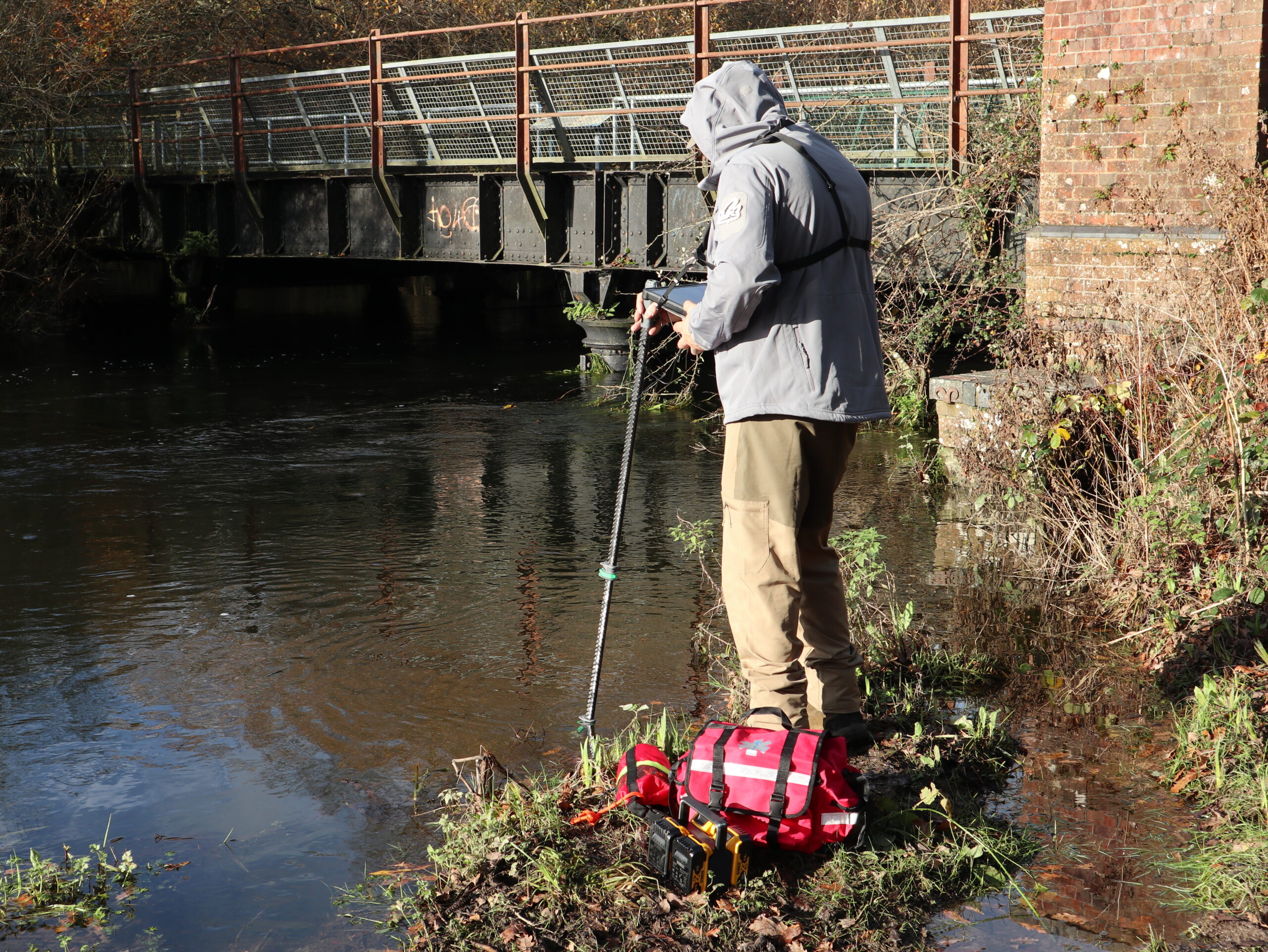
The rescue pole product pack includes:
- Oculus Md750 sonar unit
- Getac tablet
- Robust carbon-fibre multi-adjustable pole with directional glass sights
- Quick release sonar bracket
- 10m throw line
- Multiangle flood light
- Padded hi-vis carry bag
It is a lightweight, portable kit which can be disassembled to fit into general vehicles, making it highly effective as a good first response tool. It offers the ability to locate objects quickly in bodies of water (e.g. finding distance, direction and depth of persons or objects) and allows first responders to search the area for a missing object or person without waiting for a dive team or ROV to arrive. It works well in conjunction with the dive teams, as the first responders can use the product to locate the object or person even when dealing with murky water or low light conditions, which would hinder the progress of a dive team as they have an inherent visual disadvantage.
Two pack variations are currently available: the first has the adjustable pole extend up to 1m; the second up to 3m. A Getac tablet serves as the monitor which is suited to the challenging environments commonly experienced by search and rescue teams. It is known to hold up well against corrosive salt water, dust, drops and extreme temperatures. A custom 3D printed docking case holds the Getac tablet. It has a quick connect sonar cable socket combined with a dual battery pack, which is ergonomically designed to allow the user to efficiently use the equipment in time-sensitive scenarios.
The case is chest mounted using padded X back straps, keeping the user’s hands free. The Oculus M-series is one of the market’s leading sonar technologies with frequencies from 375kHz to 3.0MHz, operating ranges from 0.1m to 120m and a depth rating <200m. It also features single- and dual-frequency views allowing combined versatility of shallow- and deep-water searches.

UAV search and rescue
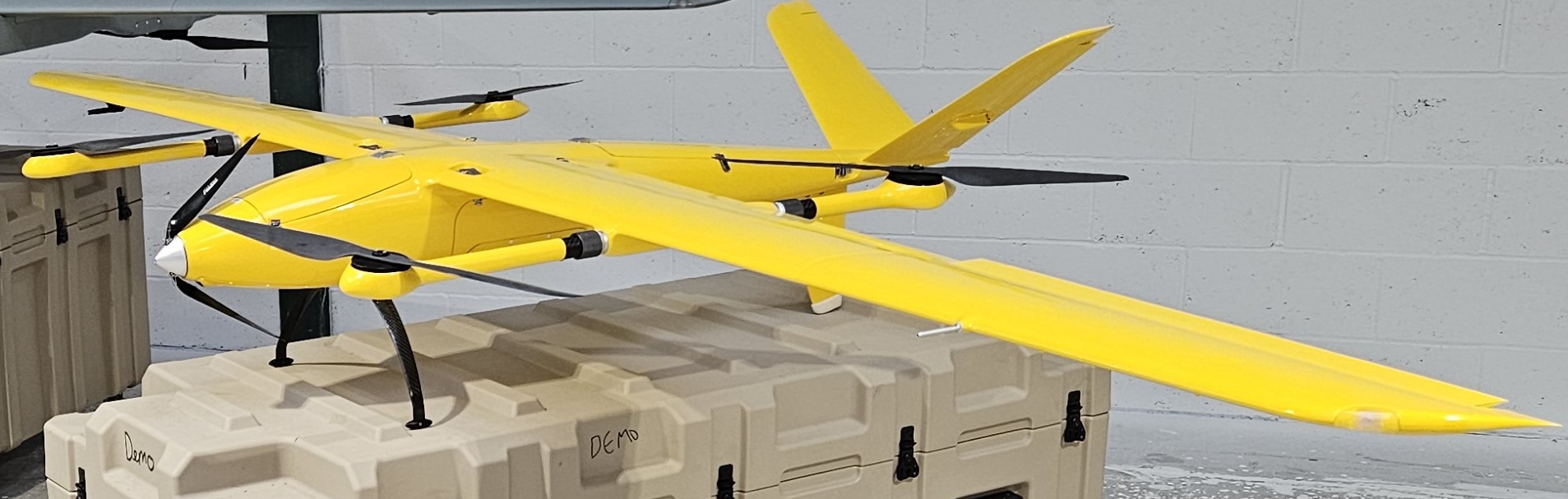
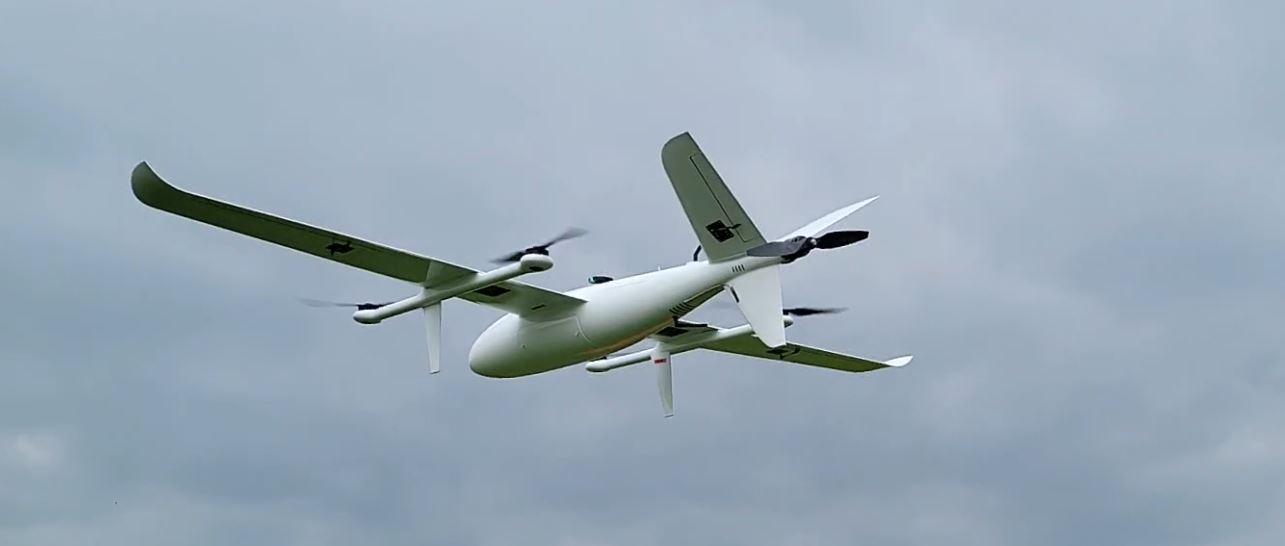
UAV search and rescue offers a solution to firefighters and police looking for missing persons as a cheap alternative to helicopter services. We have a fleet of drones that are portable and can be transported by an estate car or SUV, so the first responders can go to the last known location of the lost person. The drone can then be unpacked on site, taking an average of 2–3 minutes due to it being a simple toolless procedure. Once assembled, it can then lift off vertically, as it is a VTOL drone. This enables the search and rescuer team to get to remote locations within their vehicle before launching the drone from either the truck load bay or the car roof to then start searching for the missing person.
This VTOL advantage helps rescue teams scout deeper into remote locations without having to find large flat open spaces. Mounted on the drone are numerous third-party sensors to help locate the missing person(s). Firstly, we have a market-leading high-resolution thermal camera which can pick up heat sources from a circling height of 1km. It is also equipped with an 80x zoom camera (40x optical, x2 digital). Once the VTOL drone is in the air, the onboard mapping system can be programmed to carry out a sophisticated grid search of the person’s last known location. With a separate live video and data stream we can feed standalone live-mapping systems to give an instant layout of the search area.
Once the drone begins carrying out its mission, it searches the assigned search grid with the thermal camera. A sensor which is a third-party IMZI catcher picks up the international mobile describer information from all mobile devices whether it be 2G, 3G, 4G or 5G. This enables the drone to identify any phone signal that may be within its search pattern area within 1km. From this information the operator can identify the mobile phone signal it is looking for, should the phone be within range. The drone acts as a portable mobile phone mast, so it doesn’t matter whether the missing person has a phone signal.
Our drone acts as a mobile phone carrier giving it a signal enabling us as the operator to send messages directly to the missing person’s mobile phone. This gives the drone operator a precise grid location of where the person is. Following a communication via message or call, the operator can then decide to send a search team directly to that location, or it can order the drone closer and try to identify the missing person by using the powerful payload camera and thermal technology built into it.
The idea behind this solution is to greatly reduce the cost of deploying air search teams with helicopters and a painstaking planned grid reference that would then need to be communicated amongst all rescue teams. Being incredibly portable and only a fraction of the cost compared to a helicopter purchase, maintenance, fuelling etc., it offers search and rescue teams a valuable resource to cut down expenses without sacrificing efficiency. Multiple drones can be deployed at the same time, each from different ends of the search grid, enabling a quicker search to be carried out and saving valuable minutes which can be the difference between success and failure of a rescue. As each drone search is automated via a planned search mission, no areas are accidentally missed. This enables just one person to carry out the mission, which would normally require a whole team with resources behind it.
For more information, please visit: https://www.umsc-uae.com/
About the Author

Sophie Sobell
Sophie Sobell has been working at Unmanned Systems since its conception in 2022 with product development and marketing. She has worked for multiple companies for the last 5 years and been involved behind the scenes with suppliers to the military for product development and discovery.
