

Around the world, there are over 4,800 oil terminals responsible for storing nearly a billion cubic meters of crude oil and other combustible or flammable petroleum products (source: www.tankterminals.com). Many of these terminals use floating roof tanks (FRTs). Though FRTs are considered safer than traditional fixed-roof and open-top storage tanks, they still afford the possibility of gas or vapor leaks that can ignite due to lightning or other causes.
An FRT is an aboveground tank in which a metal deck or pan (the roof) floats directly on the surface of the liquid. The roof is flush with the wall of the tank and moves up and down with the level of the liquid, much like a piston in a cylinder. The purpose of the system is to minimize the volume of vapor present in the tank, as well as to reduce the emission of vapors from the tank thanks to a rim seal between the product fluid and the environment.
When a failure occurs on a rim seal, there is the potential for flammable vapors or products to escape. Escaped vapors are troublesome for two reasons: financial loss and the potential for fire. If a fire is not detected quickly, the impact can be disastrous in terms of life safety, facility downtime, loss of production and environmental impact. For all of these reasons, most locally observed codes and regulations require fire detection at the floating roof seal, where the risk of fire is greatest.

The design and size of storage tanks can differ with each operator and site, requiring a flexible solution to meet individual needs. With its ease of installation and low maintenance digital Linear Heat Detection
(LHD) provides a cost-effective answer. The LHD cable can be cut to length as required and a single cable can protect the largest of storage tanks.
Linear Heat Detection cable is a simple and reliable product providing uninterrupted detection along its length ensuring the complete circumference of the rim seal is protected. The sensing cable is formed from a pair of twisted steel conductors each with temperature-sensitive insulation and then an overall outer sleeve. When the temperature-sensitive insulation reaches its predetermined alarm temperature the two conductors short together providing the digital or switched signal.
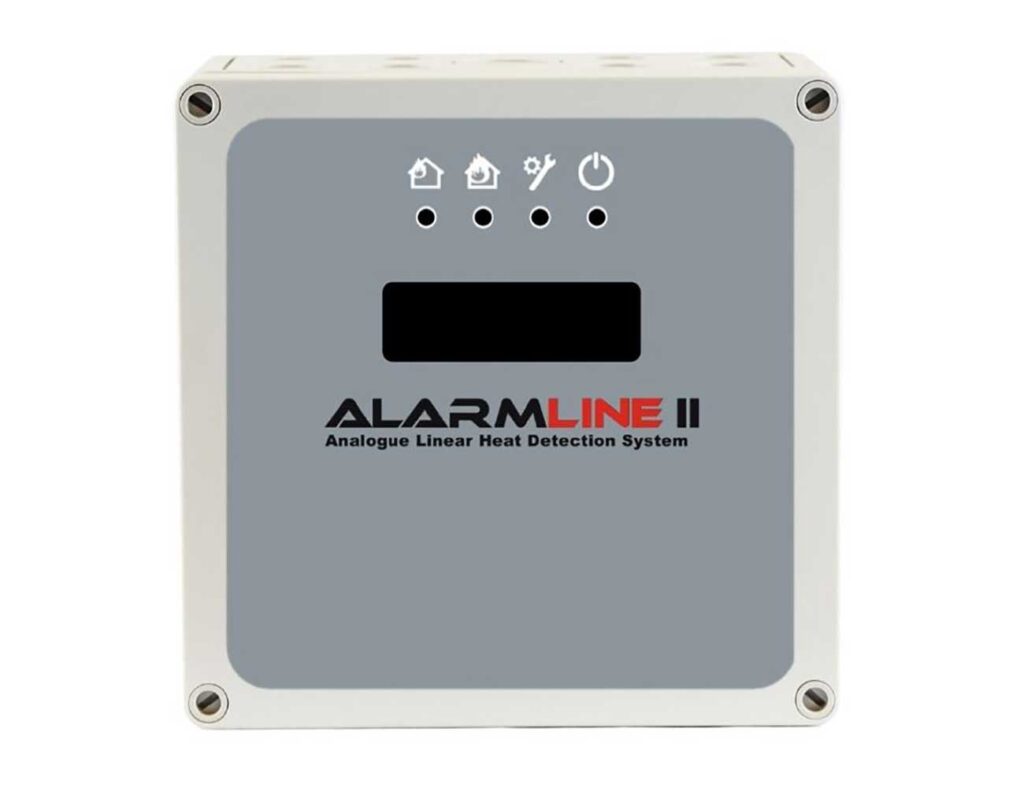
The cable can be connected to any unit capable of monitoring a switched signal, i.e. conventional fire panel, addressable switch monitor unit or PLC. LHD cable is classified as a “simple device” but suitable safety barriers must be used to provide the Intrinsically Safe (IS) protection required for the system in hazardous areas. Having a fixed alarm temperature, the operation of the digital LHD is unaffected by changes in the ambient temperature

Kidde provides a selection of fixings and clips to retain the Linear Heat Detection (LHD) cable in place. Fixings should be placed at intervals of no more than 1.2m apart. Where cable ties are used they should be used in conjunction with a neoprene sleeve and not over-tightened to prevent damage to the outer sleeve of the LHD.
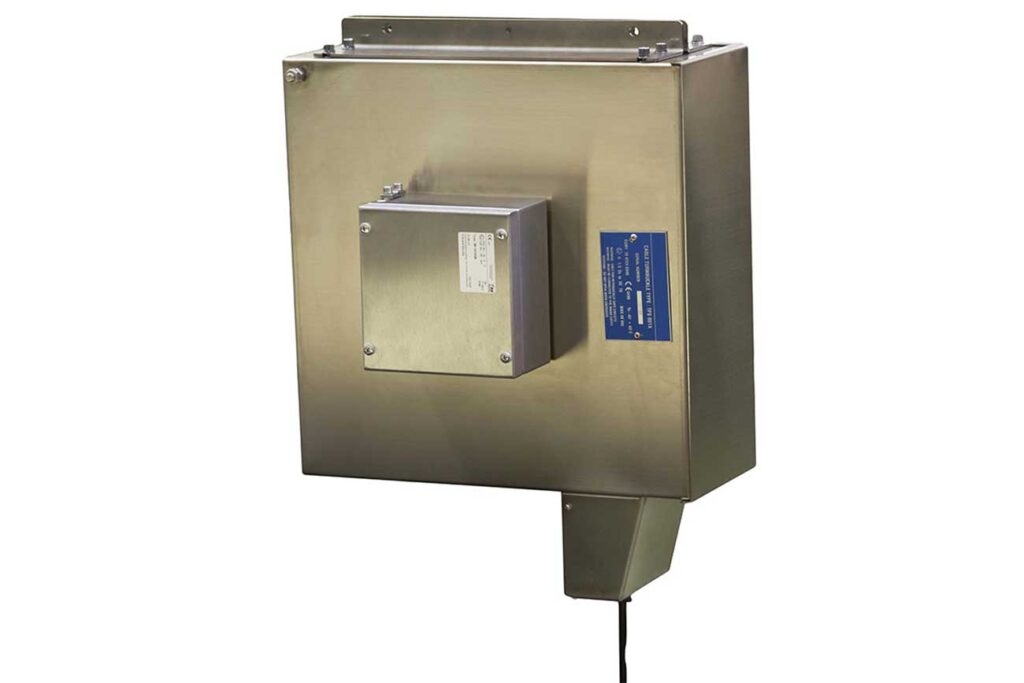
The electrical connection between the roof and the tank rim can be made using the ATEX-approved automatic cable reeler or retractable cable. The Automatic cable reeler is installed at the tank rim and connected to a junction box on the roof. As the roof rises and falls the reeler compensates for the change and winds cable in and out as required. Alternatively, Kidde provides coiled retractable cables which require a junction box mounted at the rim and another fixed on the
Learn more about how Linear Heat detection can provide overheating and fire detection for floating roof tanks by contacting Kidde Australia today.
For more information visit www.kidde.com.au
Or connect with Kidde Australia on LinkedIn https://au.linkedin.com/company/kidde-australia
About the Author

This post was uploaded by Mark Seton.
- Mark Seton
- Mark Seton
- Mark Seton
- Mark Seton
- Mark Seton
- Mark Seton
- Mark Seton
- Mark Seton
- Mark Seton
- Mark Seton
- Mark Seton
- Mark Seton
- Mark Seton
- Mark Seton
- Mark Seton
- Mark Seton
- Mark Seton
- Mark Seton
- Mark Seton
- Mark Seton
- Mark Seton
- Mark Seton
- Mark Seton
- Mark Seton
- Mark Seton
- Mark Seton
- Mark Seton
- Mark Seton
- Mark Seton
- Mark Seton
- Mark Seton
- Mark Seton
- Mark Seton
- Mark Seton
- Mark Seton
- Mark Seton
- Mark Seton
- Mark Seton
- Mark Seton
- Mark Seton
- Mark Seton
- Mark Seton
- Mark Seton
- Mark Seton
- Mark Seton
- Mark Seton
- Mark Seton
- Mark Seton
- Mark Seton
- Mark Seton
- Mark Seton
- Mark Seton
- Mark Seton
- Mark Seton
- Mark Seton
- Mark Seton
- Mark Seton
- Mark Seton
- Mark Seton
- Mark Seton
- Mark Seton
- Mark Seton
- Mark Seton
- Mark Seton
- Mark Seton
- Mark Seton
- Mark Seton
- Mark Seton
- Mark Seton
- Mark Seton
- Mark Seton
- Mark Seton
- Mark Seton
- Mark Seton
- Mark Seton
- Mark Seton
- Mark Seton
- Mark Seton
- Mark Seton
- Mark Seton
- Mark Seton
- Mark Seton
- Mark Seton
- Mark Seton
- Mark Seton
- Mark Seton
- Mark Seton
- Mark Seton
- Mark Seton
- Mark Seton
- Mark Seton
- Mark Seton
- Mark Seton
- Mark Seton
- Mark Seton
- Mark Seton
- Mark Seton
- Mark Seton
- Mark Seton
- Mark Seton
- Mark Seton
- Mark Seton
- Mark Seton
- Mark Seton
- Mark Seton
- Mark Seton
- Mark Seton
- Mark Seton
- Mark Seton
- Mark Seton
- Mark Seton
- Mark Seton
- Mark Seton
- Mark Seton
- Mark Seton
- Mark Seton
- Mark Seton
- Mark Seton
- Mark Seton
- Mark Seton
- Mark Seton
- Mark Seton
- Mark Seton
- Mark Seton
- Mark Seton
- Mark Seton
- Mark Seton
- Mark Seton
- Mark Seton
- Mark Seton
- Mark Seton
- Mark Seton
- Mark Seton
- Mark Seton
- Mark Seton
- Mark Seton
- Mark Seton
- Mark Seton
- Mark Seton
- Mark Seton
- Mark Seton
- Mark Seton
- Mark Seton
- Mark Seton
- Mark Seton
- Mark Seton
- Mark Seton
- Mark Seton
- Mark Seton
- Mark Seton
- Mark Seton
- Mark Seton
- Mark Seton
- Mark Seton
- Mark Seton
- Mark Seton
- Mark Seton
- Mark Seton
- Mark Seton
- Mark Seton
- Mark Seton
- Mark Seton
- Mark Seton
- Mark Seton
- Mark Seton
- Mark Seton
- Mark Seton
- Mark Seton
- Mark Seton
- Mark Seton
- Mark Seton
- Mark Seton
- Mark Seton
- Mark Seton
- Mark Seton
- Mark Seton
- Mark Seton
- Mark Seton
- Mark Seton
- Mark Seton
- Mark Seton
- Mark Seton
