
Every morning, India’s newspapers are filled with reports of road accidents – passenger buses plunging into mountain gorges, drunk drivers mowing down pedestrians, cars crashing into stationary trucks and two-wheelers being knocked down by larger vehicles.
These daily tragedies underscore a silent crisis: in 2023 alone, more than 172,000 people lost their lives on Indian roads, averaging 474 deaths each day or nearly one every three minutes.
Although the official crash report for 2023 has yet to be released, Road Transport and Highways Minister Nitin Gadkari cited the data to paint a grim picture at a road safety event in December.
Among the dead that year were 10,000 children. Accidents near schools and colleges accounted for another 10,000 fatalities, while 35,000 pedestrians lost their lives. Two-wheeler riders also bore the brunt of fatalities. Over-speeding typically emerged as the single biggest cause.
A lack of basic safety precautions also proved deadly: 54,000 people died due to not wearing helmets and 16,000 from not wearing seatbelts.
Other major causes included overloading, which led to 12,000 deaths, and driving without a valid licence, which factored in 34,000 crashes. Driving on the wrong side also contributed to fatalities.
In 2021, 13% of accidents involved drivers with a learner permit or no valid licence. Many vehicles on the road are old and missing basic safety features like seatbelts – let alone airbags.
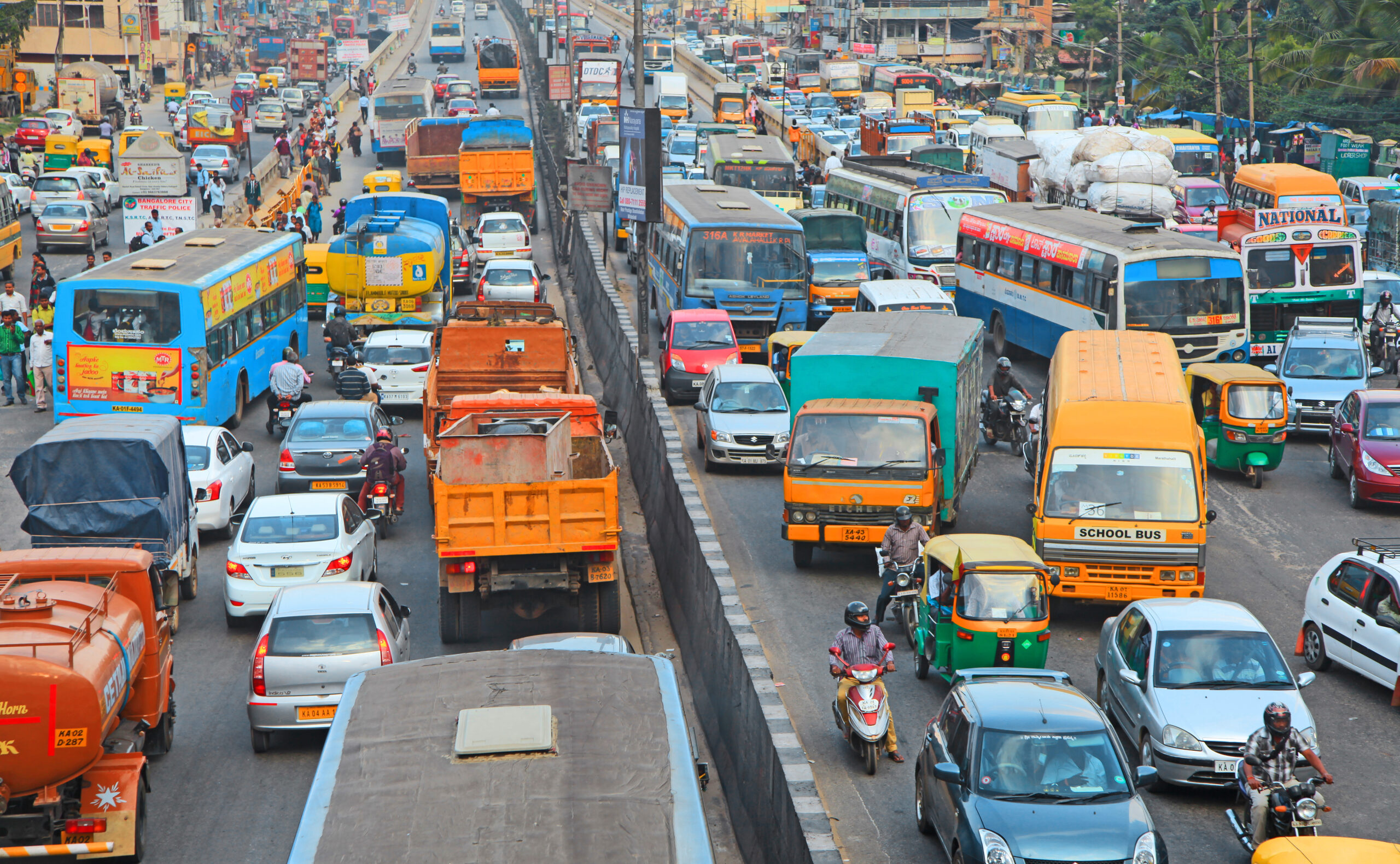
This hazardous road environment is further complicated by India’s chaotic traffic mix.
A bewildering array of users crowds India’s roads. There are motorised vehicles like cars, buses and motorcycles vying for space with non-motorised transport such as bicycles, cycle rickshaws and handcarts, animal-drawn carts, pedestrians and stray animals. Hawkers encroach upon roads and footpaths to sell their wares, forcing pedestrians onto busy roads and further complicating traffic flow.
Despite efforts and investments, India’s roads remain among the most unsafe in the world. Experts say this is a crisis rooted not just in infrastructure, but in human behaviour, enforcement gaps and systemic neglect. Road crashes impose a significant economic burden, costing India 3% of its annual GDP.
India has the world’s second-largest road network, spanning 6.6m kilometres (4.1m miles), just after the US. National and state highways together make up about 5% of the total network, while other roads – including gleaming access-controlled expressways – account for the rest. There are an estimated 350 million registered vehicles.
Gadkari told the road safety meeting that many road accidents happen because people lack respect and fear for the law.
“There are several reasons for accidents, but the biggest is human behaviour,” he said.
Yet that’s only part of the picture. Just last month, Gadkari pointed to poor civil engineering practices – flawed road design, substandard construction and weak management – along with inadequate signage and markings, as key contributors to the alarmingly high road accident rate.
“The most important culprits are civil engineers… Even small things like the road signages and marking system are very poor in the country,” he said.
Since 2019, his ministry reported 59 major deficiencies in national highways, including cave-ins, Gadkari told the parliament last month. Of the 13,795 identified accident-prone “black spots”, only 5,036 have undergone long-term rectification.
Over the years, road safety audits, conducted by the Transportation Research and Injury Prevention Centre (TRIPP) at Indian Institute of Technology (IIT) Delhi, have uncovered serious flaws in India’s road infrastructure.
Take crash barriers. These are meant to safely stop vehicles that stray off the road – without flipping them over. But in many places, they’re doing the opposite.
Despite clear standards for height, spacing and installation, on-ground reality often tells a different story: the metal barriers at the wrong height, mounted on concrete bases, or poorly placed. These flaws can cause a vehicle, especially a truck or bus, to flip over instead of being safely stopped.
For more information please visit: https://www.bbc.com/news/articles/c4g49pgx6d0o
About the Author

Asia Pacific Fire, Editor
- Neil Bibby
- Neil Bibby
- Neil Bibby
- Neil Bibby
- Neil Bibby
- Neil Bibby
- Neil Bibby
- Neil Bibby
- Neil Bibby
- Neil Bibby
- Neil Bibby
- Neil Bibby
- Neil Bibby
- Neil Bibby
- Neil Bibby
- Neil Bibby
- Neil Bibby
- Neil Bibby
- Neil Bibby
- Neil Bibby
- Neil Bibby
- Neil Bibby
- Neil Bibby
- Neil Bibby
- Neil Bibby
- Neil Bibby
- Neil Bibby
- Neil Bibby
- Neil Bibby
- Neil Bibby
- Neil Bibby
- Neil Bibby
- Neil Bibby
- Neil Bibby
- Neil Bibby
- Neil Bibby
- Neil Bibby
- Neil Bibby
- Neil Bibby
- Neil Bibby
- Neil Bibby
- Neil Bibby
- Neil Bibby
- Neil Bibby
- Neil Bibby
- Neil Bibby
- Neil Bibby
- Neil Bibby
- Neil Bibby
- Neil Bibby
- Neil Bibby
- Neil Bibby
- Neil Bibby
- Neil Bibby
- Neil Bibby
- Neil Bibby
- Neil Bibby
- Neil Bibby
- Neil Bibby
- Neil Bibby
- Neil Bibby
- Neil Bibby
- Neil Bibby
- Neil Bibby
- Neil Bibby
- Neil Bibby
- Neil Bibby
- Neil Bibby
- Neil Bibby
- Neil Bibby
- Neil Bibby
- Neil Bibby
- Neil Bibby
- Neil Bibby
- Neil Bibby
- Neil Bibby
- Neil Bibby
