

Depth perception is a visual processing skill and the ability to determine the distance between objects and perceive our surroundings in three dimensions. Visually when we look at an object or scene we can discern width, length, height and how far away objects are. One of the main limitations when interpreting images from a Thermal Imaging Camera (TIC) is a lack of depth perception. It’s important to understand and allow for the limitations and to use procedures to enhance its use and reduce risks.
Visual depth perception
Visual depth perception is typically classified into the following:
ν Oculomotor – Some eye muscles angle the eyes inward to focus (convergence). Other eye muscles help the eyes to focus to see objects (accommodation). These muscles provide depth cues.
ν Binocular cues – Based on the input of sensory information in three dimensions from both eyes with binocular disparity, a process known as stereopsis.
ν Monocular cues – Can be represented in just two dimensions and can also be observed with just one eye.
Visually, even two-dimensional or monocular clues will still give us a reasonable degree of depth perception, due to the eye’s ability to detect such things as:
υ Shades and shadows – How light and shadows give dimension to objects, such as height or depth.
υ Texture gradient – We can see more detail when objects are closer.
υ Interposition – Overlap of objects.
υ Relative size – Things that are closer appear larger than the same object further away.
υ Linear perspective – Parallel lines converge as they get further away.
Depth perception and the TIC
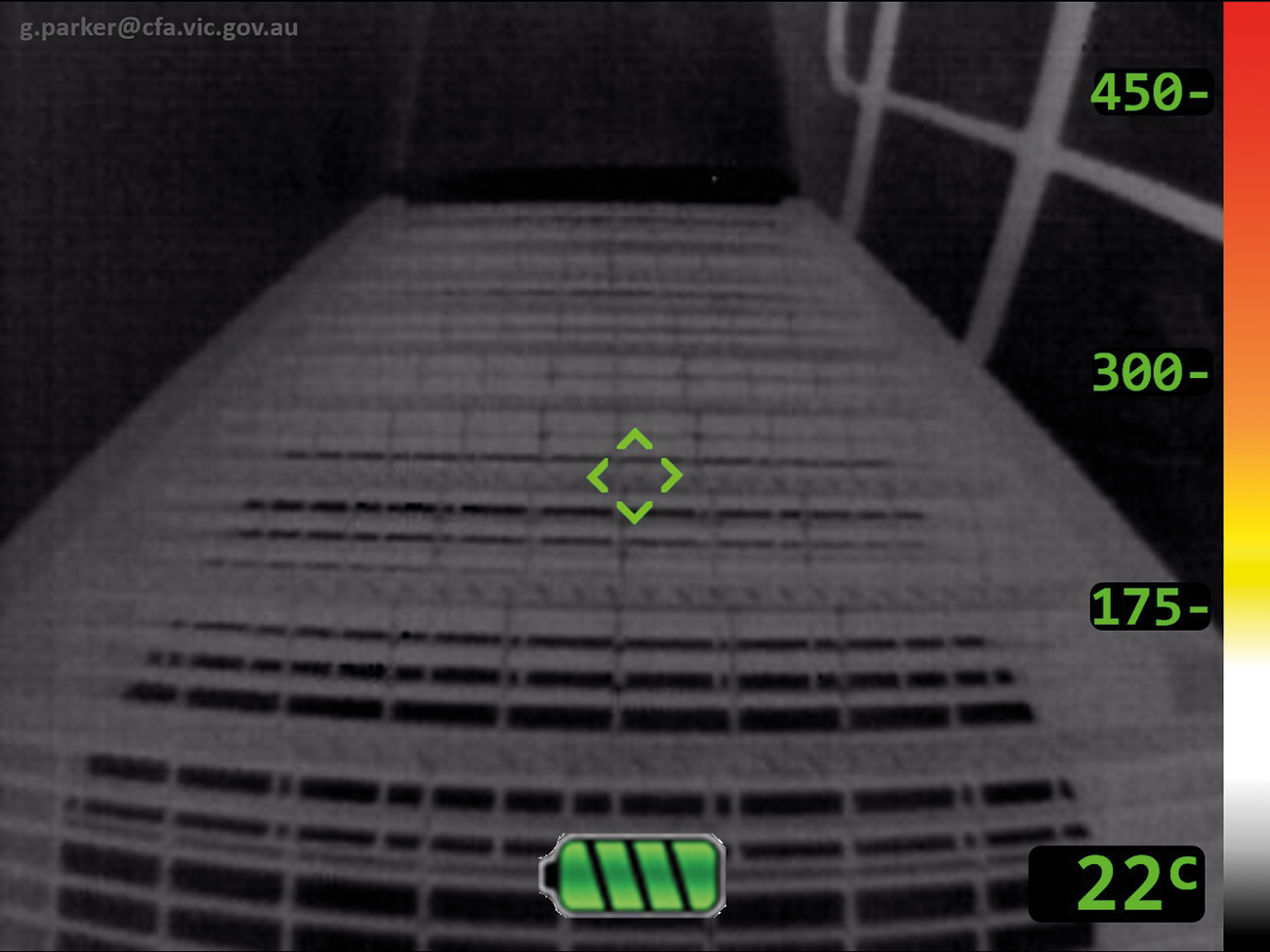
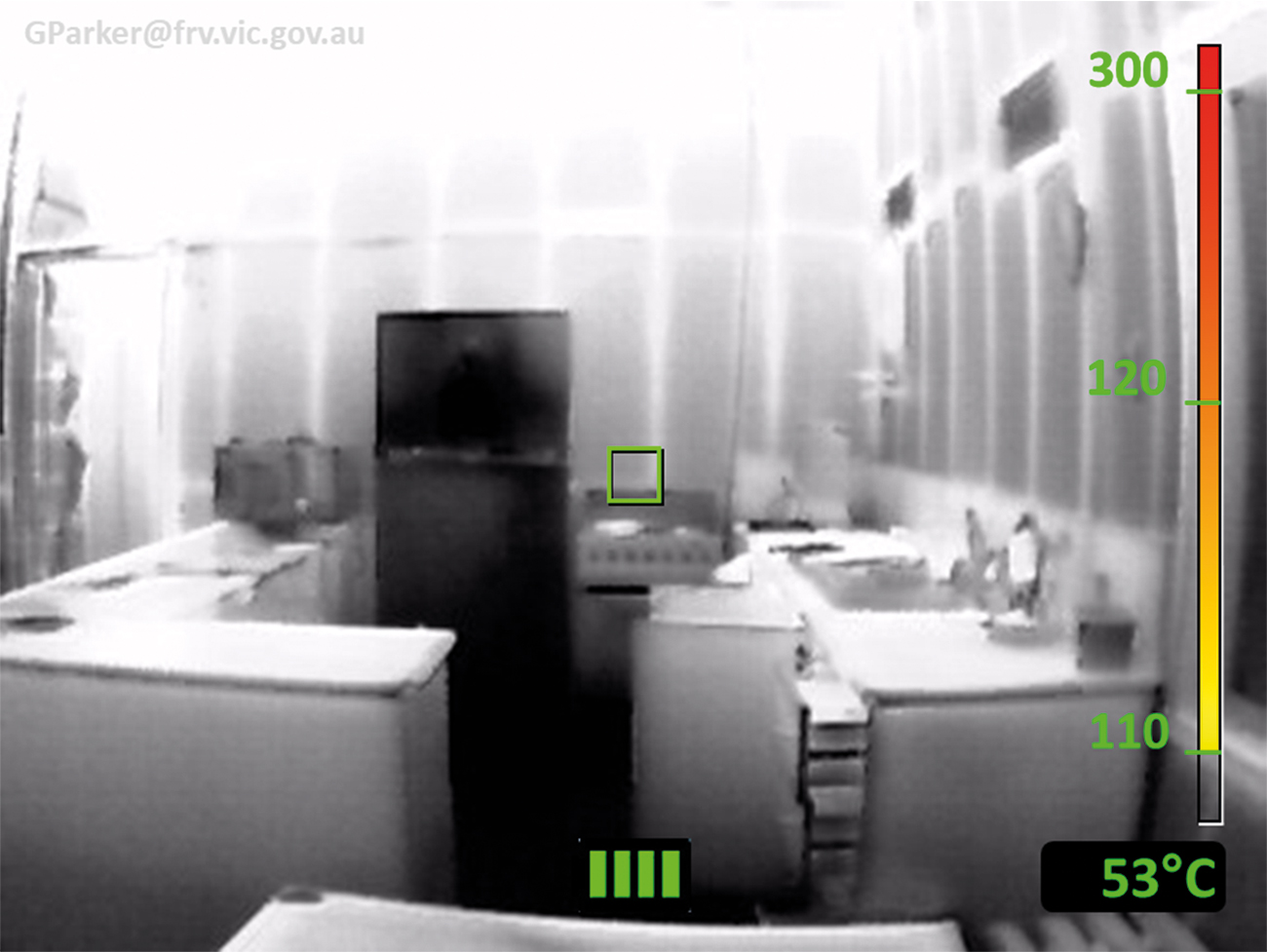
The camera displays a two-dimensional, Infrared (IR) screen image with a limited Field of View (FOV) and a fixed focal length. It lacks the fine detail that we normally expect to see visually with binocular and monocular cues.
The TIC may indicate the relative size of objects, interposition and linear perspective, but they may appear much different in relation to how they would normally appear visually. When using a TIC, items at the same temperature may also have low thermal contrast and can be displayed as the same or similar shade of grey scale or screen colour further reducing detail.
Risks to firefighters
Limited depth perception can impact efficiency and firefighter safety. It is important to understand our three-dimensional environment for situational awareness, navigation, searches and for locating and identifying the distance and dimensions of objects. This also includes identifying hazards, fire location, behaviour and potential.
Factors such as low thermal contrast and limited FOV can also reduce our ability to identify objects and hazards. These together with a lack of depth perception, fixed focus and a two-dimensional screen view result in limitations with camera use and risks that include, but are not limited to, the following:
ν The need and time taken to scan areas due to the limited FOV.
ν Accuracy in identifying the spatial layout of spaces.
ν Identifying hazards such as changes in levels or holes.
ν Relative to our visual sight, objects on the screen will appear much smaller.
ν Objects may lack detail, particularly at longer distances.
ν Low thermal contrast may make surfaces and objects appear as flat or blend into the background.
ν A visual shadow will respond immediately to changes in light. A thermal shadow will rely on high energy and may be difficult to identify. A thermal shadow may take some time to indicate on a surface and may remain in place after an object has moved.
ν Damage such as bowing or the angle of building surfaces may be difficult to identify.
ν Oversaturation of the screen in a high-temperature environment may reduce image details.
ν Navigation of obstacles and hazards may require other sensory inputs.
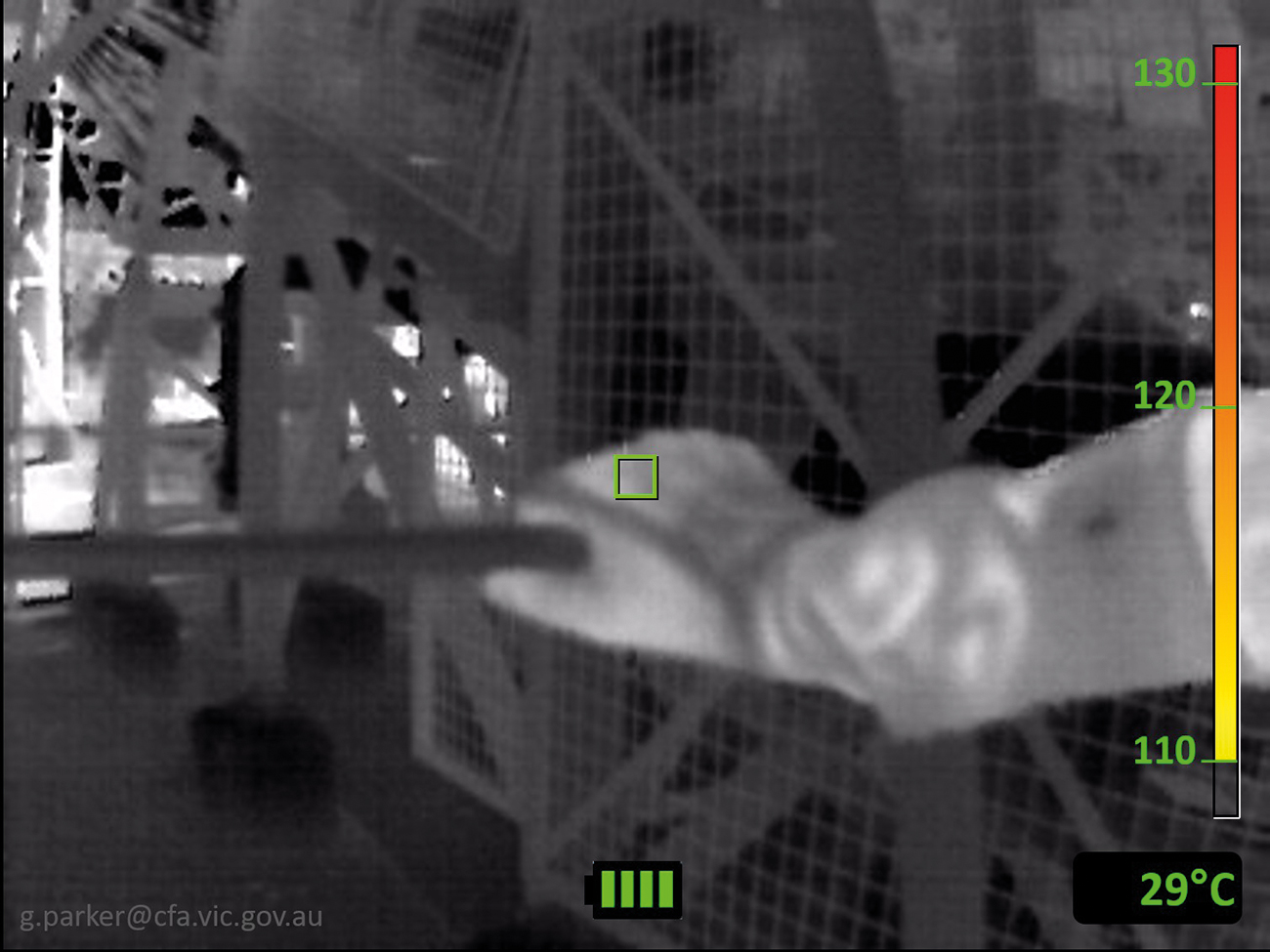
ν There may be a tendency to reach short or long of objects such a handles, handrails and steps when using the camera to guide your hand or feet to them.
ν Identifying the movement or velocity of objects due to a lack of detail with motion parallax and optic flow.
Allowing for a lack of depth perception
We should always use other sensory inputs such as sound, touch and any limited visual sight for warnings and to verify objects.
When interpreting IR images we can still be aided by our visual perception of the camera display with depth details that are available in IR, such as: Relative size of known objects, overlap, linear perspective and an IR version of texture gradient or detail. This may assist us in distinguishing one shape or object from another, identifying spatial relationships and the ability to recognise objects presented in different ways. For example, darker, lighter, smaller, at different angles and in a different setting. This can also include recognizing familiar objects that are partially hidden.
We can lessen the impact of the limited FOV and depth perception by initially conducting a detailed scan of the ceiling, walls and floor area with the camera as we enter each new room or space, taking in the widest possible FOV. We may also have to adjust the camera’s orientation and viewing angle to optimize the FOV and the displayed image. This can be followed inside the room by closer scans of areas of concern as required, identifying more detail of objects of interest and hazards.
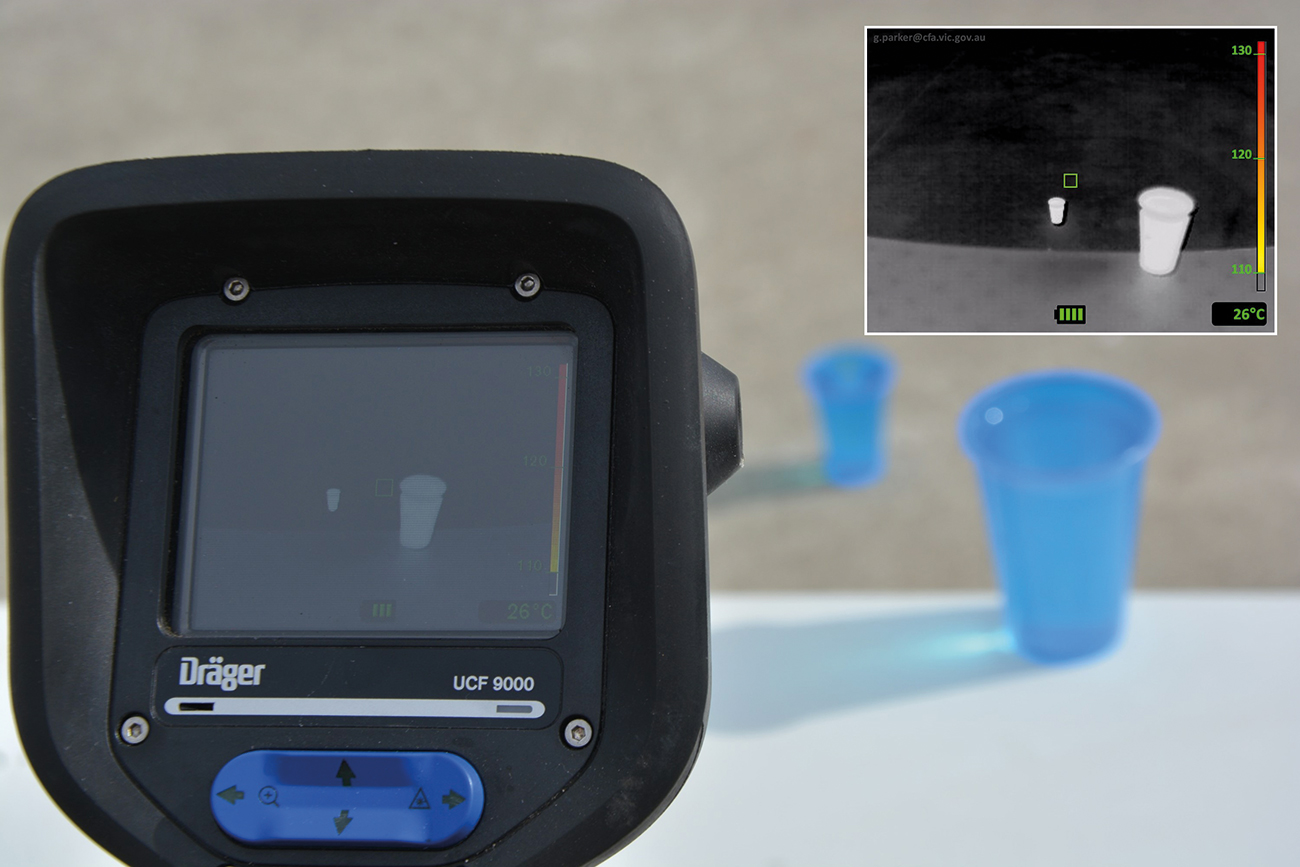
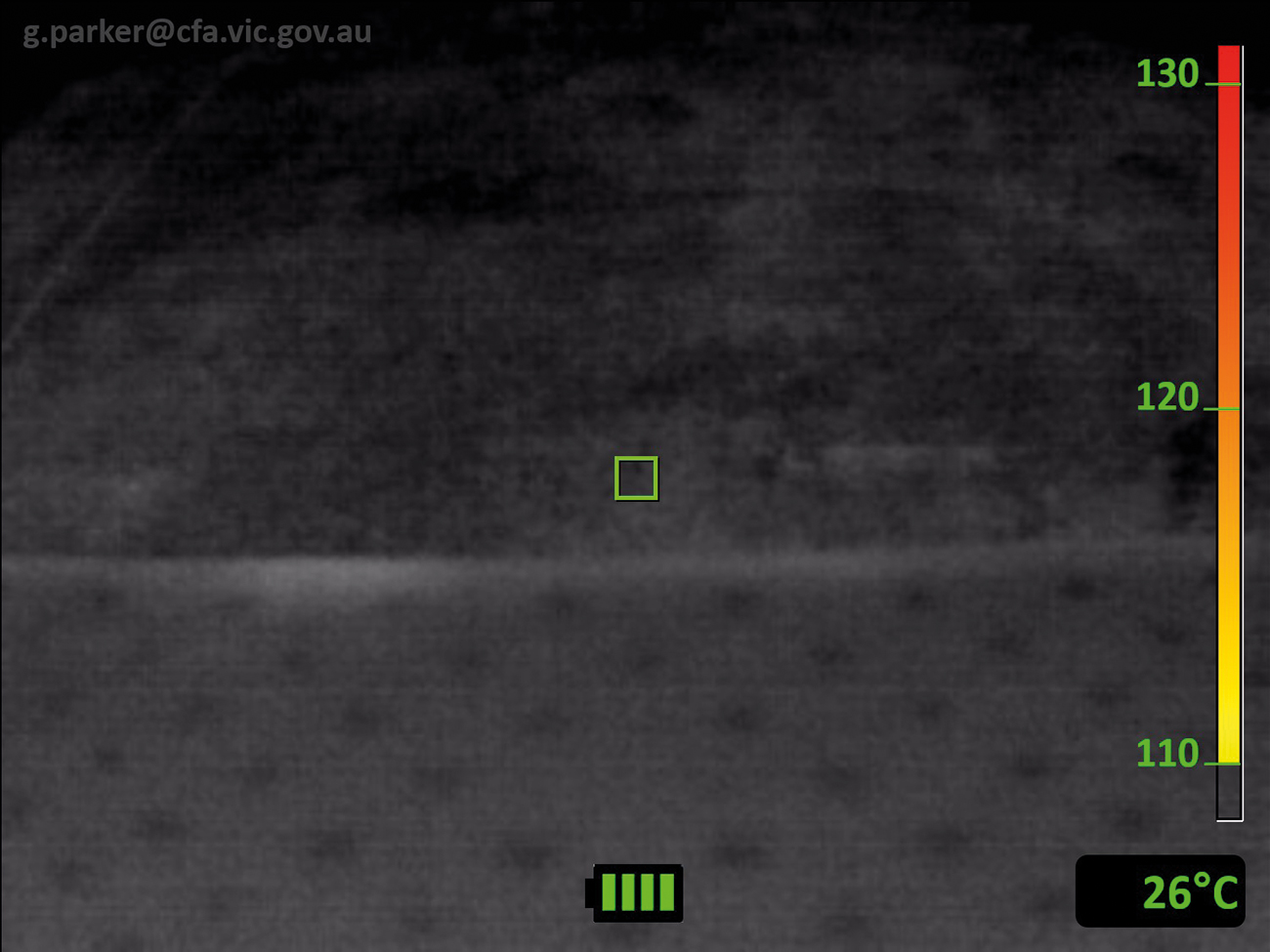
The operation of the camera, image quality and interpretation of the image is important. A camera with a high-resolution sensor and good image quality with low Noise Equivalent Temperature Difference (NETD) may be capable of displaying more detail and contrast of objects within the FOV. We can also optimise image quality by keeping the camera’s lens, viewing screen and breathing apparatus mask clean and free of contaminants to improve the displayed image and view of the screen.
Firefighters should navigate obstacles and hazards with caution and in accordance with agency practices and procedures.
During training, we can practise our ability to identify and work within the limitations of depth perception in IR and attempt to estimate distance and heights in a darkened or smoke-filled environment using only the TIC and then compare that to actual measurements or by feel. Other tasks can be practised, such as using the camera to guide your hand to touch an object within reach; this will assist you in achieving a greater understanding of the limitations and in turn gain confidence in using the equipment and working within its restrictions.

Conclusion
When used correctly the camera can provide information that would otherwise be unavailable to us, but there are limitations. Conduct a thorough scan with the TIC while stationary, use other available sensory information such as what you can see, hear or feel, advance with caution at an appropriate speed and at all times use conventional, standard procedures. Practice, experience and understanding the limitations of the displayed information should enable you to avoid hazards and overcome or lessen the impact of a lack of depth perception when using a TIC.
For more information, email G.Parker@cfa.vic.gov.au
References
1. Howard, Ian. (2012). Perceiving in Depth. New York: Oxford University Press.
2. Goldstein E.B. (2014, 2017) Sensation and perception (10th ed.). Pacific Grove CA: Wadsworth.
About the Author

I joined Country Fire Authority (CFA) as a volunteer member of at the age of 16 in 1976 and commenced a full time career with CFA in January 1995. I have been working in the Latrobe Valley since 2000 and since that time have attended numerous fires and incidents in the power industry including several significant mine fires and currently working as a Senior Station Officer at the Traralgon Fire Station on D Platoon. Apart from my normal duties I have had a long term interest in firefighting aircraft operations, thermal imaging and the coal industry.
