

There are several situations where continual and large quantities of water over long distances are required by fire services. These can include asset protection during wildfire, large peat, coalmine, waste processing and landfill fires, for example.
If available we can use mains water distribution systems from hydrants, but there may be situations where the quantities required for sustained fire operations may overwhelm supplies. These may also be too far from the incident to supply by hoses or to shuttle water by tanker.
Water use
Water supplies obtained for fires may be limited or restrict other intended use. As soon as possible liaison may need to be established with relevant water-management authorities. This may include several organisations responsible for water distribution and catchments. These can also include groundwater, waterways, water recycling and re-use governance.
Legislation for the use of water from privately owned supplies used for firefighting operations and any replacement policy in place should also be considered.
Water supply for large-scale firefighting use
Supply can involve a combination of water tanker transport by road, large-diameter lay-flat hose, temporary large-diameter polyethylene pipe, pumps, portable tanks and ancillary equipment. It may be necessary to appoint a ‘Water Supply Officer’ to manage this function.
Strategic or operational planning may need to consider:
- Water demand
- Water supplies
- Getting water to the site
- Storage and distribution on site.



Water demand
A calculation of the water demand should be done to ensure the supply and systems in place are capable of meeting requirements. This may be continual supply over numerous shift periods or a system to meet peak demand when required. Supplying just 500 litres per minute (lpm) will equate to 30,000 litres per hour or 360,000 litres over a 12-hour period. 4,000 lpm over 24 hours is 5,760,000 litres.
Water supplies
Large volumes from any water supply for fires can affect other water users. Fire service access and equipment used in or from water authority catchments or facilities may also affect water quality and liaison should be undertaken. Ground or river water quality in some cases from coastal areas for example may be brackish or have high levels of salinity. If used, soil salinity can accumulate rapidly.
Water supplies can include, but are not limited to, the following:
- Water distribution or reticulated water systems – In areas where treated mains water is in place, it may be available via hydrants at or near the site. While a convenient and clean water supply, its prolonged use may overrun the capability of small water-treatment plants and take water away from domestic, industry and other uses. During large wildfires, power supplies may be cut and compromise the ability to replenish and treat water. A supply for residents to protect their property may be more beneficial and an independent source for fire service use may be preferred. Liaison with water authorities and alternative supplies for long-term use may have to be obtained. For water authorities within Australia, temporary or potable water networks are planned and built to industry standards set by the Water Services Association of Australia (WSAA) codes.
- Untreated water – Water authorities may be able to provide advice on supply and availability of water held in open catchments/reservoirs, canals, or pipelines prior to treatment.
- Water canals – These may be waterways for boats/shipping, agricultural use or used for supply to water reservoirs, treatment plants.
- Recycled/reclaimed water – Supply may be available from water and sewage treatment authorities or industry. These may be classified for use. Guidance may need to be obtained on the suitability.
- Water bores and wells – Availability and access within state or territories can be made through relevant authorities.
- Static water supplies (standing water bodies) – Water from rivers, streams, dams, lakes and other water supplies can include public and privately owned assets.
- Large water tanks and cisterns –These may be established for firefighting or other supply needs. High demand or prolonged use may drain the capacity, also taking water away from other intended private or public use.
Recycling water on the site – For example, water run-off from peat fires into blocked drains may be pumped back into fire-affected areas. Water quality assessment and advice for fire service personal health and safety may be required. This method may only be suitable for returning/retaining ground fuel moisture levels.



Getting water to the site
Typically, two methods can be utilised for remote water supply to the point of distribution or the fire. This can be water transported by vehicle or direct pumping. Considerations may be the quantity of water required, available resources, time, efficiency and cost.
Road transport of water can be achieved with fire service or contract vehicles. Fire appliances typically range in capacity from around 2,000 to 11,000 litres or 20,000 to 30,000 litres for contract tankers. Road transport may be suitable for lower volumes of water or if the water source is a further distance away. Road transport may depend on vehicle types, availability, road networks, distance and turnaround times. Filling and unloading times are typically around one hour plus travel time. Fill points need to be planned, consider access filling method and traffic management. Once on site, supply can be done by pumping direct into the distribution system in place until empty, or by immediate offloading into storage tanks for use as required, this may free the vehicle to immediately return and refill.
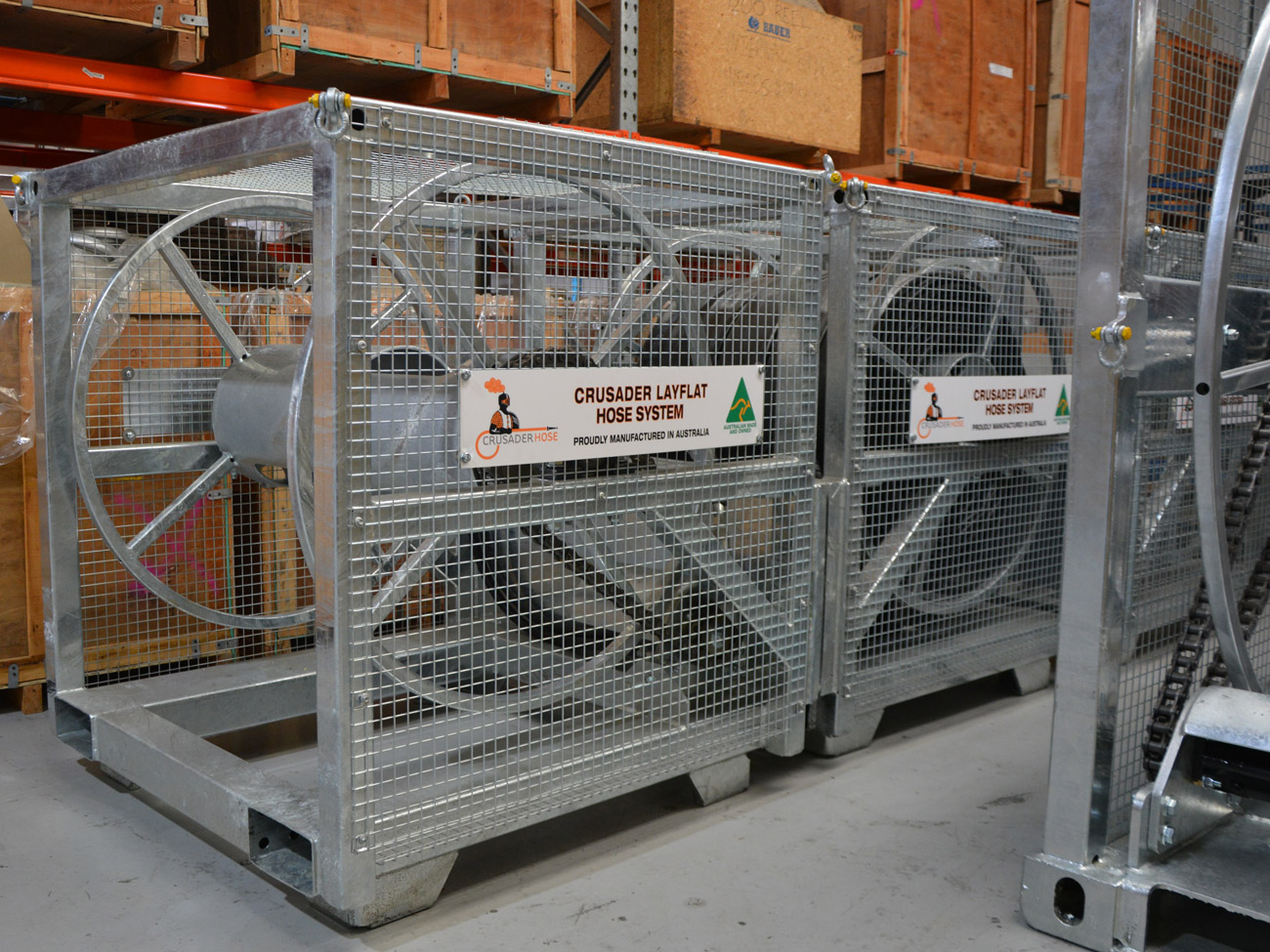
Pumping water via large-diameter hose or pipes can be done over several kilometres with large-diameter hose or pipes, thus reducing the frictional loss. Once established it can provide continual supply. It will require favourable terrain, access, suitable pumps including relay pumps if needed, large-diameter lay-flat hose or pipes assembled on site.
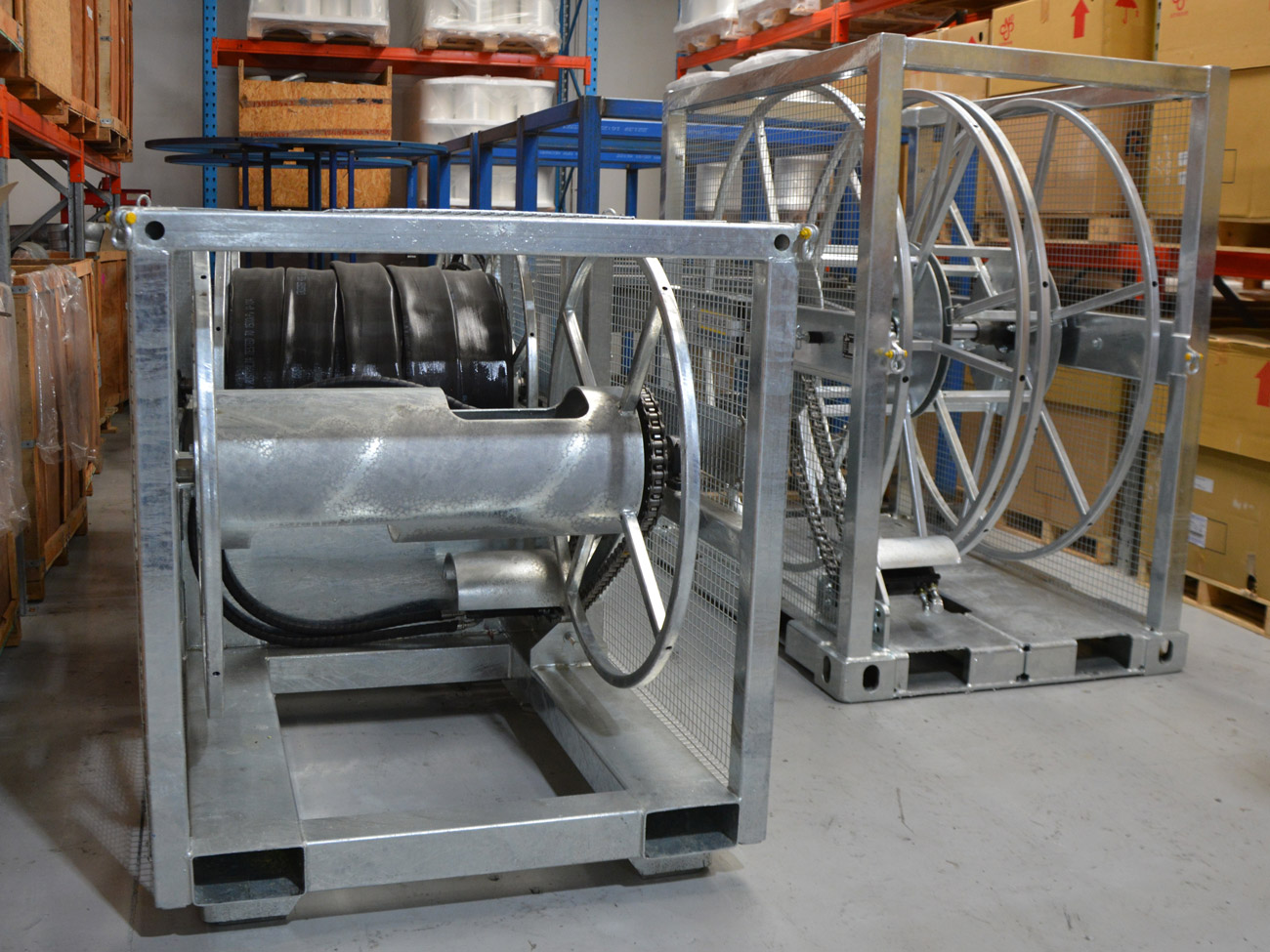
Fire service equipment can include specialist hose laying, and in some cases retrieval, systems. These systems may need to be deployed on surfaces suitable for road vehicles. Hose diameter can range in size, typically, 65, 90, 100, 125, 150mm lay-flat hose. Hose diameter of 90mm or more is generally considered large diameter.
Commercial or contract lay-flat hose may primarily be used for irrigation or mining equipment. In most cases these typically range in diameter from 100 to 300mm. The hose lengths are usually loaded continually onto a reel system. An advantage of this system is that it can be deployed quickly from a truck or trailer and can also be laid off-road using earthmoving equipment. Some equipment also incorporates a mechanical hose retrieval system.
Pipe systems can utilise HDPE (High Density Polyethylene) or PE (polyethylene) pipes. These can be transported to the site in lengths and joined by ‘butt-fusion jointing’ or electrofusion welding for continual lengths. These pipes come in a wide range of diameters. They can also accommodate preformed and clamp-on outlets. For temporary installations once use is complete, it’s possible to cut, transport and re-use pipes. Other systems for HDPE/PE pipes may include lengths with pre-fitted quick couplings. These, as with commercial lay-flat hose systems, may be available via hire or contract suppliers.
Pumping to the site can be via open or closed-circuit relay, using fire service or contractor supplied pumps. Consider the need for adaptors for hoses and pump fittings for contract equipment.
A suitable area close to the water supply may need to be prepared to site pumps. Vegetation may have to be removed in areas that hoses or pipes are laid to prevent damage if there is potential for fire.
These systems can also be used for de-watering areas after floods.
Storage and distribution
On-site water storage can provide a buffer for both supply and delivery, including a reserve for periods of high demand. It can also form part of either an open or closed water relay system. Framed or frameless portable tanks typically range in size from 500 to 24,000 litres; large-capacity metal sectional panel tanks can also be erected on site. Other on-site storage such as dams if available can also provide flexibility.
Water distribution may require a combination of standard fire service hose, large-diameter supply hoses, ancillary equipment, portable pumps, tanks, fire appliances and water tankers.
Conclusion
The planning and logistics for reliable and continuous water supply should not be underestimated to achieve successful outcomes. This includes liaison with water and catchment authorities to ensure firefighting activities do not affect their ability to supply customers or compromise water quality.
Reference
NFPA 1142 Standard on Water Supplies for Suburban and Rural Firefighting
About the Author

I joined Country Fire Authority (CFA) as a volunteer member of at the age of 16 in 1976 and commenced a full time career with CFA in January 1995. I have been working in the Latrobe Valley since 2000 and since that time have attended numerous fires and incidents in the power industry including several significant mine fires and currently working as a Senior Station Officer at the Traralgon Fire Station on D Platoon. Apart from my normal duties I have had a long term interest in firefighting aircraft operations, thermal imaging and the coal industry.
