
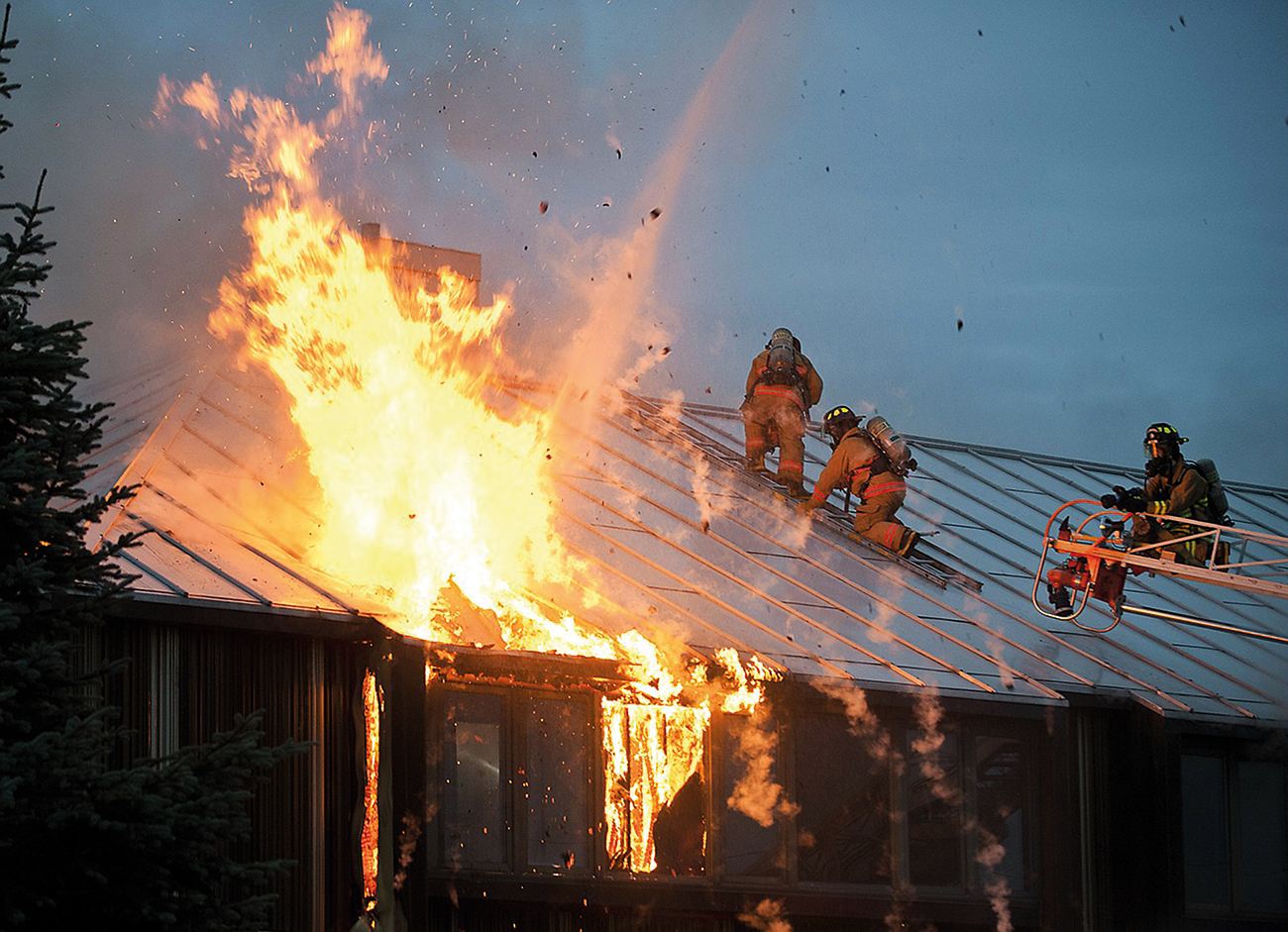
For well over a century, automatic fire sprinklers have proven to be a trusted, reliable, safe and very effective means to mitigate the fire risk to life, property and the environment. When installed in residential settings, fire sprinklers have been shown to improve occupant survivability in a typical fire by around 90% – an extraordinary potential improvement in public safety.
Further studies show the overwhelming majority of Australian preventable fire fatalities occur in class 1 homes, such as single detached, row and terrace houses. Yet at some point in size, occupancy or risk, Australia’s National Construction Code (NCC) duly requires automatic fire sprinklers to be installed in all classes of buildings except class 1 residences.
Home Fire Sprinkler Coalition Australia (HFSCA) is a strategic public safety partnership between AFAC, the National Council for fire and emergency service agencies in Australia and New Zealand, and the Fire Protection Association Australia (FPA Australia), the national peak fire protection industry body. The Coalition’s aim is to help better protect Australian communities from residential fires through raising awareness of and advocating for the life-saving benefits of automatic home fire sprinklers.
The partnership is an example of what we need to do more of, and that is to forge stronger collaboration between fire agencies and industry to improve public safety. In effect, the Coalition represents every fire service in Australia and through FPA Australia’s members, the people and companies that serve the national fire protection industry.
The Coalition is blessed to have a range of wonderful supporters like Johnson Controls – our first corporate member – Reliable, the Institution of Fire Engineers and the International Fire Suppression Alliance (IFSA), which was established more than 20 years ago to globally promote the use of effective water-based fire protection systems. The Coalition’s projects currently underway and planned have been generously supported by IFSA grant funding and seek to improve home fire safety through a series of initiatives articulated in its Strategy 2021–2025.
The big, hairy challenge we face is to replicate the benchmark set by domestic smoke alarms and secure mandatory installation of home sprinklers in all new Australian class 1 homes. Like smoke alarms, home sprinklers should be installed anywhere someone sleeps, when people are at their most vulnerable to the risks of fire.
As an intermediary goal, the Coalition’s work will culminate in a Proposal For Change to the NCC. ‘Intermediary’ since we have seen after NCC 2019, which mandated fire sprinklers in mid-rise shared residential accommodation buildings (NCC classes 2 and 3) that significant effort is still required. The status quo is difficult to overcome, even when the initiative being proposed (and eventually mandated) will save lives and, in the case of 101D, will save considerable money per project. The Australian Building Code Board’s own 2018 Regulation Impact Statement, for example, estimated $900K in savings per typical class 2 apartment block if a 101D system was installed rather than an AS 2118 system (now worth $1.06M in 2022 dollars).
Achieving the inclusion of safe, reliable cost-effective systems as Deemed-to-Satisfy solutions in the NCC 2019 has not stopped there, with ongoing support, advocacy, education and training still required to overcome teething problems being experienced in what has been a game-changer in residential fire protection. These learnings are being applied to the class 1 sprinklering objective through the framework set out in the Coalition’s Strategy, which lists six priority focus areas: Research; Standard setting; Advocacy; Education; Capability and capacity development; and Technical advice.
Standard setting
A small HFSCA-led project team of subject matter experts has developed a draft standard for an Australian home sprinkler design – tentatively named FPAA102, following on from the 101D and 101H systems now referenced in the NCC. The standard is still very much in ‘draft’ and will remain so until it is proven through extensive testing that it ticks the required boxes of being safe, reliable, cost-effective and fit-for-purpose.
Like the 101D and 101H systems, the 102 design seeks to leverage off the water infrastructure in a residential building to minimise costs of installation and maintenance. Based on contemporary knowledge and technology, the project objective was to design a one-pipe, one-head operation automatic fire sprinkler system for class 1 homes. One-head operation is an important feature on two fronts:
- Life safety – 102 is a ‘life safety’ system to extend the time occupants have to safely escape a fire, not a property protection system. As such, its activation seeks to control and suppress the fire to reduce risk and improve tenability, both for occupant egress and at the time of fire brigade intervention.
- Accessibility – the project team believes the pressure and flows required to power a one-head residential sprinkler system can be found in a large percentage of metropolitan homes on a reticulated water supply network. It means not needing a pump, which can be another point of failure and which imposes significant maintenance costs across the life of the property.
Once finalised, the 102 standard will be put through the process of review and public comment required by the Australian Building Codes Board approval for future referencing in the NCC.
Research
The Coalition will not and cannot publish such an important life safety design until it is properly tested. HFSCA is in discussion with universities, fire authorities and industry to research and test the developed design. Updating a literature review to map all of the settled science and agreed knowledge of home sprinklers will reduce the amount of physical testing required in live burns, the most expensive element of this exercise. It is intended that the subsequent computer modelling will be based on these outcomes, with full-scale live-fire testing in accordance with the accepted science and good practice also confirmed in the literature review.
Advocacy
Advocating for the introduction of mandatory class 1 sprinklers targets numerous stakeholders, including – but not limited to – governments, regulators, plumbers/installers, fire agencies, industry bodies, insurers, Registered Training Organisations (RTOs), fire protection practitioners and product suppliers. All of the pieces of this puzzle need attention as delivery requires sensible, consumer-focused and clear regulation on who can design, install and certify these systems, as well as the competent and well-regulated practitioners who develop plans and turn these into tangible protection.
Education – Capability and capacity development
Chicken and egg – industry capacity to deliver home sprinklers is low, but then so is consumer demand for installations. Both are needed if this new market is to succeed. Mandating home sprinklers will need RTOs to teach what is required, and for this they need solid material for their students. Home sprinklers also need to be understood by responding firefighters, who may need to re-establish a system after activation. More importantly, firefighters are trusted, respected and credible voices in community safety, so can advocate for home sprinklers as they have done so effectively with domestic smoke alarms.
HFSCA is currently working on programmes that help achieve this desired end-state. A home sprinkler training prop is being installed in TAFE NSW’s Randwick facility with discussions underway with RTOs in four states for more to follow. These props will be used by plumbing apprentices and have been co-funded by the HFSCA and its valuable partners, Reece, Auspex and JCI. Planning continues for the development of supporting training material, initially for 101D and 101H (five on-line modules available, with more on the way) but ultimately for 102 home sprinklers.
Fire and Rescue NSW became the first fire authority to accept HFSCA’s offer to co-fund home sprinkler training props with installation of a system in its Emergency Services Academy at Orchard Hills in Sydney’s west. To further support fire agencies, HFSCA is leading and funding a project team to develop home sprinkler training material for operational firefighters.
Technical advice
Supporting key stakeholders, like water supply authorities, fire agencies, plumbing regulators, etc. with technical advice is an important foundation on which improved public safety can be delivered. The Coalition has noticed, however, that the integration of fire protection elements in a domestic drinking water system – ‘enhanced plumbing’ – has highlighted what a change this has been for the sector. Many have an ingrained historical understanding of ‘fire suppression’ designs as static, stand-alone systems that have black pipe and black water, and are therefore rightly seen as a high risk to water quality and public health.
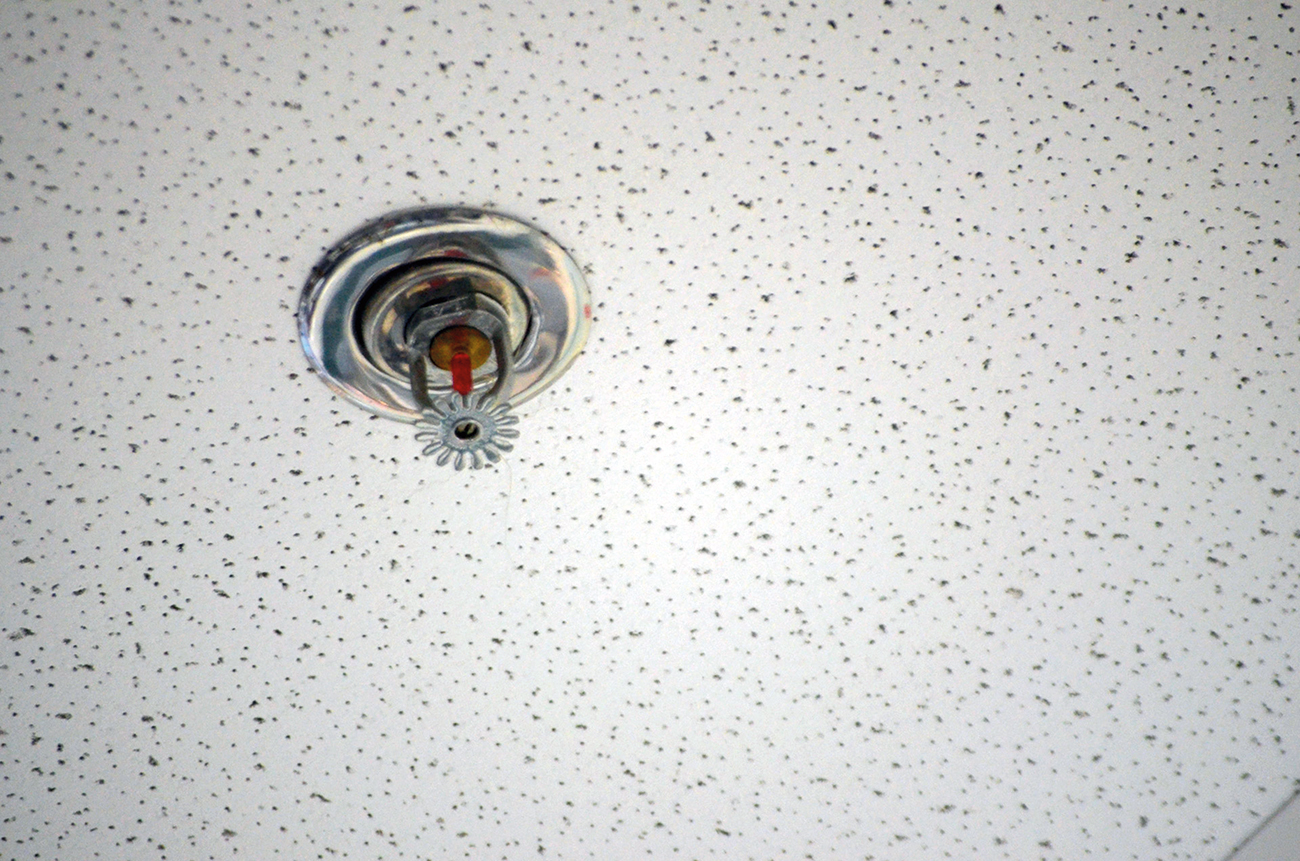
Modern residential sprinkler systems integrate short droppers and sprinkler heads into the already required water pipework, connected to home fixtures and fittings. Each time a tap is turned on or a toilet is flushed, occupants are proving the presence of water in their sprinkler system. If the water flow/pressure drops off or is stopped, emergency repairs from a plumber will also re-establish their sprinkler system.
A follow-on from integrated design is the need for maintenance is minimised. By the very fact that AS 2118 systems are static, black pipe and black water systems, regular inspections and testing is required because the system sits there inactive until it’s needed.
Conclusion
There is considerable work underway to aid HFSCA’s quest to mandate automatic fire sprinklers in Australian class 1 homes, but more effort lies ahead. With the valuable support of its partners and supporters, the Coalition’s mission to better protect life, property and the environment through home sprinklers is gaining momentum. So stay tuned.
For more information, go to homefiresprinklers.org.au
About the Author

Mark Whybro joined the NSW Fire Brigades in 1981 and retired after 40 years’ service in mid-2021. His last role was Assistant Commissioner Community Safety, with state-wide responsibility for Fire and Rescue NSW’s Prevention and Education function. Mark’s work continues in public safety as the Chair of the Home Fire Sprinkler Coalition Australia.
