
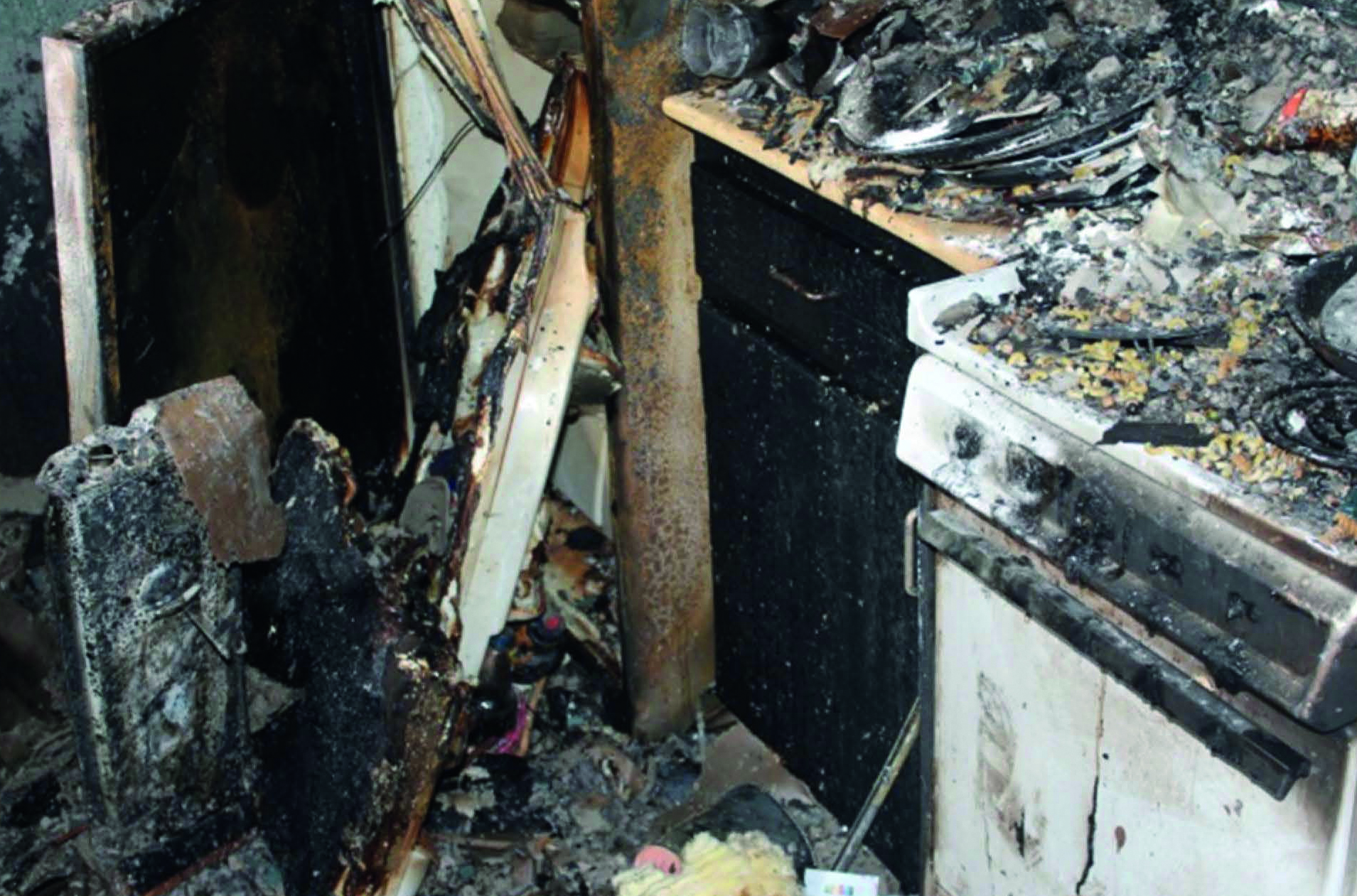
This is a story that has its roots in New England, USA but it really has relevance in virtually every corner of the world, including Australia. It’s about keeping people and property safe, and how one firefighter’s passion to do just that has worked. The villain of the story is cooking fires. They are a massive problem.
In the US alone, they are the number-one cause of household fire and cause billions in direct and indirect damage every year. They are the leading cause of fire-related injuries and the second leading cause of fire-related deaths.
Enter the heroine, Lt. Annie Pickett. Lt Pickett runs the Community Risk Reduction (CRR) and Outreach Division for the Worcester Fire Department in Worcester, Massachusetts.
Worcester sits about 64km west of Boston, Massachusetts. It’s a beautiful place with rolling tree-lined hills, quaint suburbs and an active downtown with a blend of modern and Victorian-era architecture. Worcester is the second largest city in the state with a population just shy of 186,000. This is where Lt. Annie Pickett has lived her whole life. Yes, Lt. Pickett is a firefighter but what you don’t know yet is that keeping people safe is in her blood.
When Lt. Pickett was pinned as a firefighter, she was pinned with her dad’s badge. As she puts it: ‘I had a few family members that were on Worcester Fire Department.’ A few? She goes on: ‘My uncle retired as a District Chief. My other Uncle was a Captain. Um, another Uncle was a firefighter.’
Annie didn’t just choose to be a firefighter; she was born to be one. Annie’s family has been putting itself in harm’s way for the residents of Worcester for decades, and by the early 1980s, she was ready to continue that tradition. ‘At the time that I wanted to be a firefighter, there were no female firefighters here in Worcester,’ she recalls. ‘And I was “re-directed” to help people in the emergency medicine field, so I became a paramedic.’ Did you catch that? ‘Re-directed’. It’s still challenging for some women to pursue a career in the fire service but imagine what it was like back in the 1980s. And to want to be the first. It also says so much about Annie that after being ‘re-directed’ away from the fire service, she still became a paramedic. Clearly, she was committed to the idea of helping people in her community, one way or another. Or, in Annie’s case, both ways.
Annie served her community as a paramedic through the 1990s. During this time, she found herself involved in one of the most catastrophic fires the city has ever experienced. In early December 1999, emergency services responded to a massive five-alarm fire at the Worcester Cold Storage and Warehouse Company. The fire had been accidentally started by a homeless man and his girlfriend who had been squatting in the vacant building. Firefighters struggled to control the blaze and began a desperate search for the couple, believed to still be in the smoke-filled labyrinth of a warehouse. When the fire had finally been extinguished, six brave firefighters had lost their lives. They had been searching for the couple who had fled the scene long before emergency crews had arrived. That fire has forever left a mark on the people Worcester and especially for those who lost loved ones and colleagues that day.
A year later, Annie Pickett joined the Worcester Fire Department. She was now the first of three women to join the team. ‘We had to pass the same physical agilities test, the same 16-week academy that everybody else did,’ says Annie. ‘There were no changes in the game plan for us. And so, that was important to me and the other two females in the recruit class, that there were no changes to anything.’
It’s impossible not to hear her determination. And her pride. Motivated by family history and a desire to serve her community, Lt. Pickett jumped into her new career with both feet. It wasn’t long before Annie recognized how important collecting and crunching fire data was to the goal of reducing fire risk in her community.
‘The year I started looking at the statistics, we actually had a civilian fire death. We had gone a few years without a civilian fire death in the City of Worcester, which was really good for the second largest city in New England. We had a civilian death (when) I started looking at the fire data; and we also had a firefighter line-of-duty death in 2011; the warehouse fire in 1999; and another line-of-duty death in December of last year. So, I started looking at the data, and cooking fires came up as the most popular fire problem call.’
Lt. Pickett also discovered a concerning increase in the rate at which these unattended cooking fires were happening. In 2014, 559 unattended cooking fires were reported throughout the City of Worcester. The following year, that number grew to 578. But that’s not all the numbers revealed. ‘When I started looking at areas of the city where these fires were happening they seemed to be condensed in a certain area. And then I noticed that it was certain buildings. High-rise buildings (which) made sense because the population was going to be higher. And then when I looked at the property analysis, they were owned by our number one landlord in the city, which was the Worcester Housing Authority.’
So, Annie gathers the available data on fire incidents in the City of Worcester. The data confirms that fires are a problem, but the bigger problem is cooking fires. And where are a lot of these cooking fires happening? In larger, multi-family apartment buildings. Which makes sense: More people = Greater risk. Who owns most of the buildings where these cooking fires are happening? The City’s largest landlord. Which, in this case, is the Worcester Housing Authority. In 2015, 138 of the city’s unattended cooking fires came from four high-rise apartment buildings. Nearly a quarter of the city’s cooking fires came from four buildings owned by the Housing Authority. What was the property damage cost? More than $500,000 USD.
‘We targeted not just the four buildings with the highest number of incidences, but we then did a risk analysis on those buildings and we found out that 100 percent of those units had older adults, 86 percent of the older adults had a disability, or mobility issue; and 100 percent were low-income; and 15 percent of that group, those first four buildings, had no income at all.’
After Lt. Pickett had used the data to help define the nature and scale of the cooking-fire problem in Worcester, what next? How could she help prevent cooking fires from happening in these four buildings in the first place? Enter: serendipity.
Annie stumbled upon the booth of Pioneering Technology where a rep was showcasing its temperature-limiting control technology for electric coil stoves. An aftermarket solution, they replace a stove’s electric coils with solid cast-iron burner plates designed to regulate temperature and help prevent cooking fires. People can still cook, fry or boil, but the burners avoid the high temperatures that can cause cooking oil or household items to ignite.
Annie made repeated efforts with the local housing authority to secure government funds to purchase and install this new cooking-fire prevention technology, but it wasn’t until the Housing Authority partnered directly with the City’s Fire Department on a larger prevention education initiative that the grant application was ultimately successful.
‘We decided early on that we were just going to keep going for funding,’ says Annie. ‘I guess to date we’re getting close to 3,000 units, or 12,000 burners.’ And since the first phase of the programme began in September of 2017, the results have been outstanding. ‘We had 138 stove top incidents in 2015. There was property loss, firefighter injuries and there was a loss of life in the City of Worcester. To present date, since we’ve started this installation process, there’s been zero stove top fires where these burners have been installed. No property loss. And there’s also been, in the initial four buildings, a 96 percent reduction in emergency response.’
Think about that. Zero stove top fires. No property loss. And a 96% reduction in emergency response. The programme basically paid for itself in one year. Fewer emergency calls, no fires, no property damage, no water damage, no fire-related injuries, or deaths, in any of the properties that had switched to SmartBurner.
For Annie, this story has always been about helping to keep people in her community safe. It’s all she’s ever done, either as a paramedic or a firefighter. She was born into a family of firefighters but was ‘re-directed’ to another profession. She became a paramedic and then blazed a trail right back into the Fire Department. She studied the fire data in her city, found an opportunity to help and did everything she could to do just that. Worcester is lucky to have a Lt. Pickett.
For more information, go to preventcookingfires.com
About the Author

By Michael Quast, VP Marketing & Communications, Pioneering Technology, a leader in cooking fire prevention products and technologies.
