
The prevalence of fire-related incidents for heavy vehicles is on the rise, with the National Heavy Vehicle Regulator (NHVR) reporting a lack of preventative maintenance as one of the most significant risks of heavy-vehicle fires, along with wheel-bearing failure, defective brakes and commodity loading. Heavy vehicle fires are not only a serious, life-threatening risk but can severely disrupt business operations should the vehicle be damaged.
Fires can occur wherever there is significant heat and flammable materials, with the type of fire hazard dependent on the type of vehicle and its primary use. For example, a large compactor working on a waste site can be particularly prone to fires if rubbish isn’t regularly cleaned from the machine. The risks are further increased if the machine is working on a site where methane gas build-up is present, which is very common on rubbish tips. Vehicles need to be closely monitored as the presence of different oils, fuels and gas can create a highly volatile situation.
Undertaking a fire-risk assessment (FRA) is the most appropriate form of action one can take to identify fire hazards, eliminate risks and determine what measures are necessary to ensure the safety of drivers and the wider public. FRAs can be done via a mobile phone, tablet, or computer device and are a collaborative process that should always be undertaken with the site’s owner and, where possible, other stakeholders such as the operator of the machine.
As part of the heavy vehicle FRA, an assessor will undertake a thorough inspection which can include the following points:
- engine cooling fan
- hydraulic accumulator
- vehicle stopping time
- operator egress
- fuel and heat sources.
The assessor will then perform a risk matrix of the type of fire, from catastrophic to low risk, and the potential impact on the operator, asset and business operations. From there, an assessor will offer recommendations to reduce the risk, which may include installation of the most appropriate fire-suppression system. For example, a highly productive dragline excavator that operates on large surface-mining projects can typically cost around $60 million, therefore it makes sense to invest in the most optimal fire system to protect the machine from the risk of severe damage and costly operational disruptions.

Investing in the right fire-protection system can save lives, often halving the risk, which could mean the difference between a fire resulting in permanent disability or death and a minor incident where the occupant walks away relatively unharmed. These FRA reviews are part of the continuous improvement process, known as ‘monitoring and review’ and should be undertaken in the following circumstances:
- periodically at intervals not exceeding five years
- whenever there are changes to the equipment that could affect the fire risk
- whenever variations in use, condition or environment could change the fire risk potential
- after fire accidents or incidents occur.
FRAs are a mandatory requirement in accordance with AS5062 standard – fire protection for mobile and transportable equipment. Therefore, vehicle operators need to keep accurate and up-to-date information. The mining industry has even stricter guidelines than the regular Australian Standards as the risk of heavy vehicle fires is ever present. While hazards vary among mine sites, common fire hazards include mobile equipment, mining vehicles and engine cooling fans that can knock the vehicle fire-suppression system (VFSS) around and exacerbate the risk.
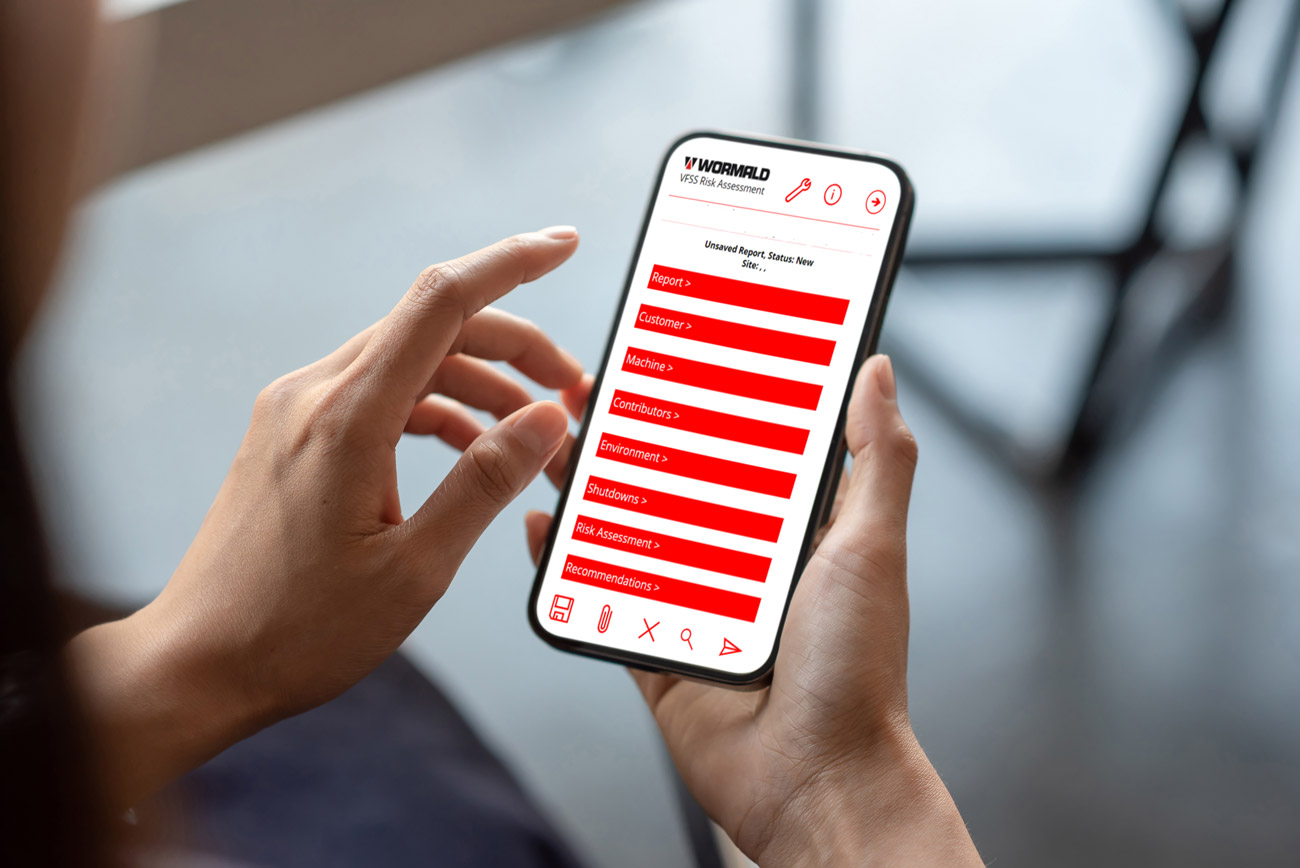
Undertaking routine maintenance and mandatory FRAs are essential for reducing fires on heavy vehicles; however, as the vehicles are often in continuous use, it’s not always possible to allocate time to conduct an assessment. For example, a person on a mine site may not have the time to spend up to four hours doing an on-site assessment. For this reason, Wormald has introduced new technology that allows its technicians to conduct fire-risk assessments on mobile and transportable machines with VFSS independently on-site. The easy-to-use FRA app was developed by Wormald’s in-house team and is the first of its kind in the industry. It was first developed for new systems but now can assess existing systems.
Wormald has implemented a regimented two-step process for undertaking an FRA using its app. First, the assessor adds the details into the app and then the information is forwarded to a Wormald peer reviewer, chosen intuitively by the system based on the reviewer’s individual experience with the machine’s risk profiles. All reviewers must have three-to-five years of experience to ensure they know what they are looking for and can develop the most appropriate solution.
Keeping up with fire obligations can be challenging, particularly for businesses with large fleets or those based in remote locations such as mine sites. However, the new app makes the process more efficient by granting Wormald vehicle system technicians’ permission to undertake FRAs directly on site using a smart device such as a mobile phone or tablet. Once the assessments have been peer reviewed, they are then converted into a document for reporting purposes.
Wormald has many customisable fire-suppression solutions to meet different VFSS needs, including foam, water spray, watermist, powder, wet chemical and gaseous systems. While the standards are only considered guidelines rather than mandates, companies should be proactive and follow the rules and regulations to keep operations running smoothly and avoid the consequences of an injury or fatality.
For more details about the new Wormald risk assessment app, contact Wormald directly on 133 166.
About the Author

Steve Oxley
Steve Oxley is Wormald’s National Product Manager for Vehicle Fire Suppression Systems. Steve is responsible for vehicle system design and development, troubleshooting, fire risk assessments and sales and training both nationally and internationally. Steve joined Wormald in 1976 and has over 40 years’ experience in the vehicle fire suppression industry. Steve is an active member of the Fire Protection Association of Australia, Technical Advisory Committee, TAC11/22 – Special Hazard Fire Protection – and the Technical Committee FP-022 for the Australian Standard AS5062-2006 and 2016 – Fire Protection for Mobile and Transportable Equipment.
