
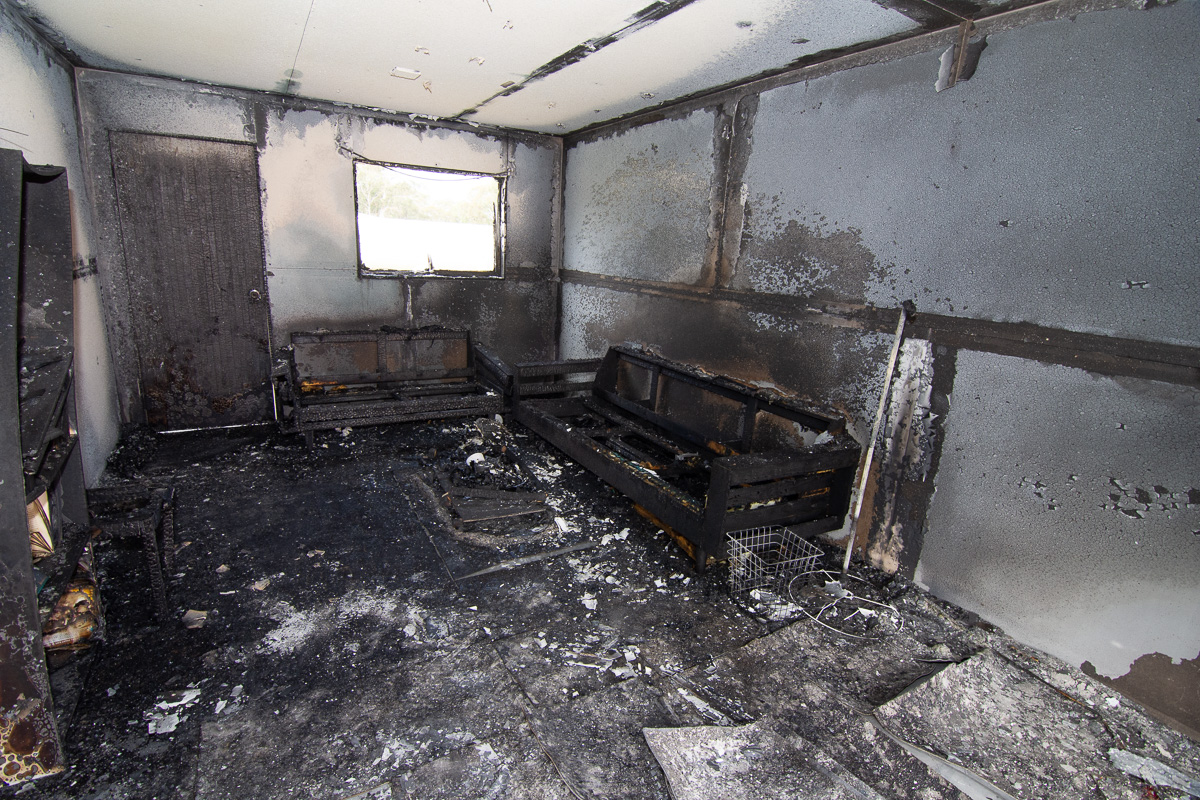
Events held during National Fire Protection Month lifted the curtain on some of the risks posed by modern fires.
The public is largely unaware about the risk of fire.
For many, it is an unknown quantity – they haven’t experienced fires, they don’t understand the potential for them to break out and they don’t know what it takes to fight them.
We all tend to think that we’re luckier than we are – the 1 in 100 chance of falling off a ladder isn’t going to happen, but we’re DEFINITELY going to win that 1 in 45,379,620 lottery jackpot!
Unfortunately, this inability to weigh up risk accurately leads to a ‘set-and-forget’ mentality – smoke alarms aren’t checked, maintenance regimes slip and a general sense of complacency kicks in.
But sometimes reality has a habit of making its presence felt. And the effects of fire, and the significant potential for them to break out, are significant.
With the shift from natural fibres and materials in furnishings to cheaper synthetic, oil-based alternatives, building occupants are more at risk now than ever before, and it’s important that we all become more alert to the potential dangers.
Research by AFAC has shown that, on average, around 64 people die every year in residential fires, compared to approximately eight per year in bushfires, but because these incidents are isolated and independent, they don’t resonate in the minds either of journalists or of their viewers/readers, and they fail to trigger action.
Big-fire footage, such as the Surry Hills fire in May, will generate a few eyeballs for a short period, but the effect will not last, as we return to our daily lives and assume that it ‘can’t happen to us’.
It is time that the public starts to link these fires together and understand their cost to the community.
Last month was National Fire Protection Month, where we highlighted the importance of fire protection and the risks inherent in fires.

In the opening webinar, we brought together two firefighters – Raymond Irving from Fire and Rescue NSW (FRNSW) and Mark Carter from Fire Rescue Victoria – and two practitioners – Mark Azzopardi from Azzop Property Services and Dale Spurway-Humphries from Performance Fire Services – to talk about what happens during a fire.
What they described and showed in videos was startling. In short, a fire in an unsprinklered home or apartment with modern furnishings:
- can hit flashover within as little as 2 minutes and 40 seconds;
- may reach temperatures of up to 1,245°C;
- will have high levels of toxicity that overwhelm an occupant long before they are affected by the heat or flames; and
- will have no hope of being saved by a fire brigade, which on average will take 7 to 14 minutes to arrive on the scene.
In comparison, a sprinklered building of the same type:
- may take up to 20 minutes to reach flashover, if it reaches it at all;
- is restricted to around 90°C;
- has reduced toxicity; and
- is likely to be saved by the brigade.
Much of the heat and toxicity rises to the ceiling, which is why the fire brigades train children to get low and crawl out of a burning room.
But at 1,245°C, it’s highly unlikely that anyone will be getting out of the unsprinklered room alive.
FPA Australia and its partners in AFAC are strong advocates for the Home Fire Sprinkler Coalition Australia and its work to introduce residential sprinklers.
Given the potential for furnishings and people to make a fire inordinately worse than it might be, suppression systems are an essential tool in the fight to keep building occupants safe.
These simple sprinkler system options are designed for easy installation and operation and help to ensure that residents are protected.
And HFSCA’s work on sprinklers for class 1a buildings means that low-cost options may soon be available everywhere.
As noted in the stats above, controlling the fire makes a significant difference to whether or not a building and its occupants will survive.
The HFSCA is working on creating the systems – it’s everyone else’s job to make sure that building occupants understand the risks and are motivated to mitigate them.
