
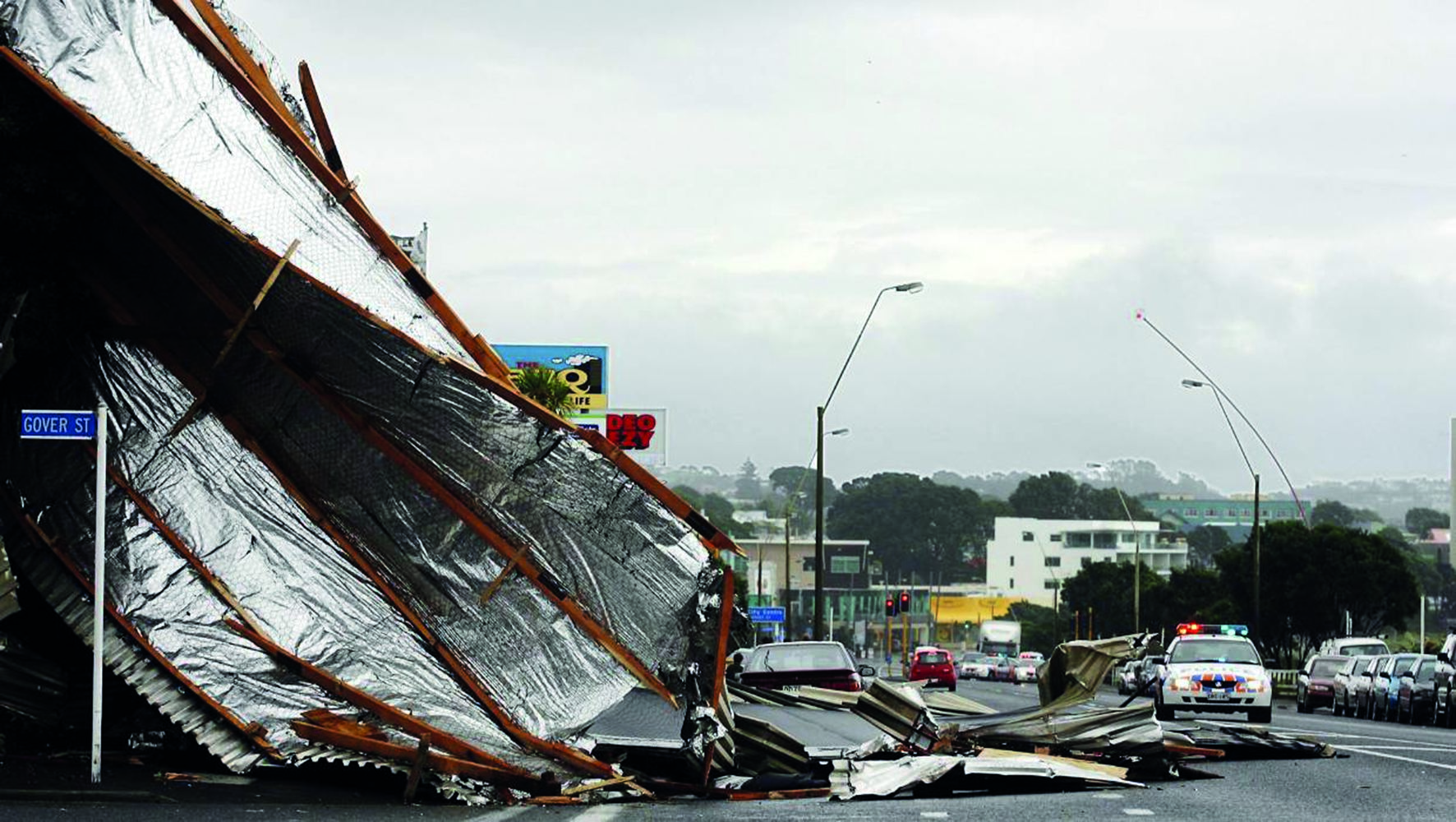
Extreme wind hazards have a substantial societal and environmental impact on countries. Due to the complex origins of extreme winds, there are great knowledge gaps about their variations and the associated mechanisms, which makes their prediction very challenging. New Zealand’s vulnerability to extreme weather is well known, due to its position in the ‘Roaring Forties’, with many population centres and infrastructure assets located in exposed coastal or hilly areas.
Wind loading competes with seismic loading as the dominant environmental loading on structures. In New Zealand over the past decade, the total insured damage costs for storms, with severe winds, was about one billion NZD (https://www.icnz.org.nz/).
Most wind-loading design applications are concerned with the strongest winds expected in the lifetime of a structure. The establishment of appropriate design wind speeds is a critical first step towards the calculation of design wind loads for structures. All buildings and structures in New Zealand and Australia are designed to resist the effects of the wind speeds specified in the wind-loading standard AS/NZS1170.2 (2011), which has been prepared by a joint Australia/New Zealand committee of relevant stakeholders including engineers and climate experts. However, New Zealand’s wind data have not been re-evaluated for purposes of updating the standard for the last 20 years, and this means that the current regional wind speeds for New Zealand in the standard need updating.
Apart from the analyses of historical wind data for the prediction of design wind speeds, hilly and mountainous terrain can significantly influence the wind speed and direction resulting in much higher wind loads.
These facts combined with some recent severe and damaging wind events – the 2004 Molesworth Windstorm, the 2007 Taranaki Tornadoes, the 2008 Greymouth windstorm, the March 2011 Wellington southerly storm (in which gusts of 60m/s and 77m/s were recorded at Baring Head and Makara Wind Farm respectively, both with significant topographic effects involved), the 2011 (Albany) and 2012 (Hobsonville) Auckland tornadoes, ex-tropical cyclones Fehi, Gita, and Hola in 2018 – have caused renewed interest in wind engineering and a questioning of the guidance offered by the wind actions standard.
Furthermore, the climate is changing and, as a result, the long-term trends in near surface wind speeds, extreme weather events and gust wind speeds are expected to change. Therefore, it is essential to investigate the possible effects of climate change on design wind speeds provided in the wind-loading standard in order to ensure the safety and reliability of future structures.
Over the past decade a coordinated research programme has been undertaken by the Wind Engineering Consortium comprising the University of Auckland, NIWA, WSP-Opus and GNS Science to investigate these questions. To date considerable research progress has been made in the areas of wind speed-up over complex terrain, and revised regional wind speeds for wind loading. These two research areas are reviewed in this article.

Wind flow over complex terrain
Airflow over hilly terrain is a complex problem with important implications in many fields. Topographic features, such as hills and ridges, can significantly increase the effects of extreme weather, such as cyclones and hurricanes, by increasing near-surface wind speeds, which consequently results in larger wind loads on structures. Estimating the wind forces on structures, the utilisation of wind power, observations at meteorological stations, the dispersion of pollutants and many other phenomena are significantly affected by wind that is influenced by its passage over hills.
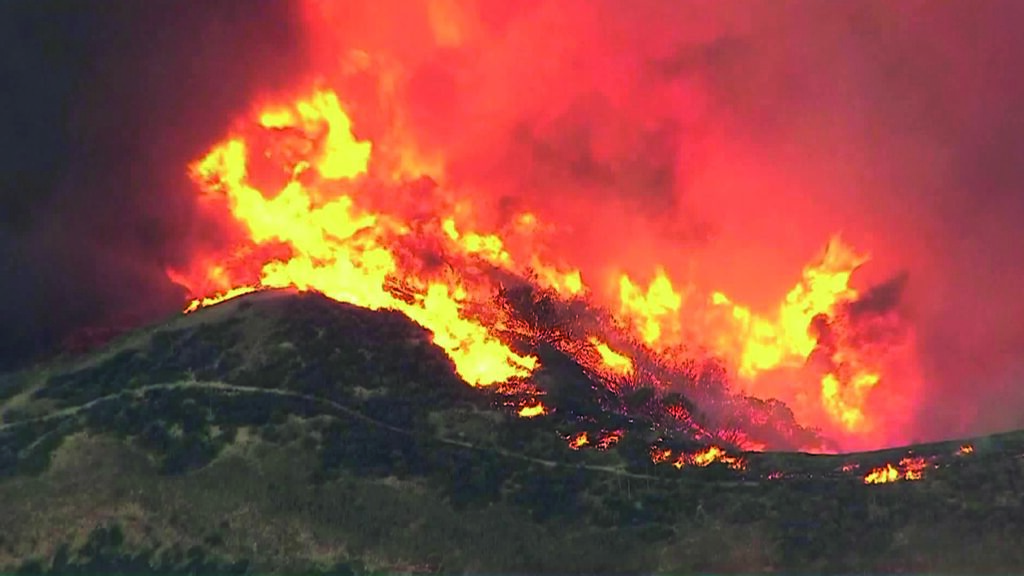
Another important aspect of studying wind-flow behaviour over complex terrain is to improve predictions of wind-driven forest fires, which quite often happen in hilly regions (for example, the Port Hills fires in 2017, Christchurch, New Zealand; the Woolsey Fire in the Los Angeles Ventura County line in 2018) where the fire propagation is mostly dominated by the dynamic features of the wind flow. However, in fire-wind modelling there are thermal effects that should also be accounted for, which cause strong updrafts and fierce winds.
Furthermore, apart from the effect of complex terrain on wind speed-up, hills can also influence the local wind direction, which subsequently distorts the directional variation of the wind climate.
In AS/NZS1170.2 (2011), the hill-shape multiplier is in the range 1<Mh<1.71 resulting in an up to three times increase in wind force. In an attempt to improve our understanding of wind flow over complex terrain and also to enhance the guidelines provided in wind-loading standards, the Wind Engineering Consortium has carried out a series of case studies and research investigations over the past decade.
The first project consisted of a comprehensive case study involving field measurements, wind-tunnel tests and computational fluid dynamics (CFD) simulations of airflow over the rugged Belmont Hill region in the Wellington area of New Zealand. The study aimed to evaluate the accuracy and feasibility of the use of many international wind-loading standards for estimating wind speed-up over complex terrain. The results demonstrated unequivocally that none of the standards gave entirely satisfactory values to correctly predict the wind speed-ups in this complex terrain with its multiple crests and valleys.
Due to the practically infinite number of real-world hill-shape geometries, the approach to understanding this problem must be to start out by examining simple hill configurations and well-described types of wind flow, and then proceed to more complex situations. Therefore, at the University of Auckland, we have been conducting wind-tunnel experiments and CFD simulations on single and multiple two-dimensional hills to understand their flow behaviour, and also trying to codify the wind speed-ups and wake regions and to improve AS/NZS1170.2 guidelines.

Design wind speeds
As mentioned above, New Zealand’s historical wind-speed data set have not been analysed for the purposes of wind loading for over 20 years, and so these data, along with the earlier data have been extensively analysed over the past two years for the purpose of revising design wind speeds, directional and lee-zone multipliers for the next version of AS/NZS1170.2. Initially, a rigorous analysis was conducted to homogenize the historical data through eliminating all the artificial breakpoints and trends, and to convert all data to a common standard framework (i.e. terrain category 2, 0.2-s gust speed). The process consisted of utilising various tools, such as wind-tunnel tests, CFD simulations and several statistical tests, to ensure the quality and reliability of the wind data. The homogenized historical gust wind speeds, along with the National Institute of Water and Atmospheric Research’s (NIWA) high-resolution weather prediction model (the New Zealand Convective-Scale Model (NZCSM)) were then used for extreme value analysis and the estimation of New Zealand design wind speeds, directional multipliers and lee zones. Based on these analyses, several substantial changes have been proposed for AS/NZS1170.2, including adding a new region consisting of the Foveaux Strait area, refinements of wind-zone boundaries, and revising all directional and lee-zone multipliers. Figure 3 shows a preliminary contour map of design wind speeds for a 500-year return period, and the revised wind regions proposed for the next version of AS/NZS1170.2. Currently, wind data from more stations are being analysed to enhance the spatial resolution of the regional wind-speed map.
The authors are also concerned with the possible effects of climate change on long-term wind speeds. To that end, we have carried out a preliminary investigation where we have analysed the gust wind records of four meteorological stations across New Zealand over the period 1972–2017 to investigate whether or not the long-term wind gust series have changed significantly, and to assess the impact of these changes in the estimation of design wind speeds. Annual and seasonal trends in both the magnitudes and frequencies of the extreme winds are being evaluated to answer the questions of ‘whether or not the long-term wind gust series have changed significantly and how these changes can be considered in the estimation of design wind speeds to ensure the safety and reliability of the future structures’. This study has now been expanded, and currently, wind data from more stations are being analysed to improve the reliability of our findings on long-term trends in wind speeds in New Zealand.
For more information, email asaf433@aucklanduni.ac.nz
Selected publications
- Safaei Pirooz, A.A., Flay, R.G.J., 2018a. Comparison of Speed-Up Over Hills Derived from Wind-Tunnel Experiments, Wind-Loading Standards, and Numerical Modelling. Boundary-Layer Meteorol. 168 (2), 213-246. https://doi.org/10.1007/s10546-018-0350-x.
- Turner, R., Safaei Pirooz, A.A., Flay, R.G.J., Moore, S., Revell, M., 2019. Use of High-Resolution Numerical Models and Statistical Approaches to Understand New Zealand Historical Wind Speed and Gust Climatologies. J. Appl. Meteorol. Climatol. 58, 1195-1218. https://doi.org/10.1175/JAMC-D-18-0347.1.
- Safaei Pirooz, A.A., Flay, R.G.J., 2018b. Response characteristics of anemometers used in New Zealand. In: The 19th Australasian Wind Engineering Society Workshop, April 4-6, Torquay, Victoria.
- Safaei Pirooz, A.A., Flay, R.G.J., Turner, R., 2018. Effects of site relocation and instrument type on recorded wind data characteristics at Wellington Airport. In: 19th Australasian Wind Engineering Society Workshop, Torquay, Victoria.
- Safaei Pirooz, A.A., Flay, R.G.J., Turner, R., Azorin-Molina, C., 2019. Effects of Climate Change on New Zealand Design Wind Speeds. In: the Australian & New Zealand Disaster & Emergency Management Conference Gold Coast, Queensland, Australia, 12 – 13 June 2019.
About the Author

Amir A.S. Pirooz is a final-year PhD candidate in Mechanical Engineering at the University of Auckland under the supervision of Prof. Richard Flay. Amir’s main research topics include the effects of complex terrain on wind speed-up and estimation of design wind speeds for wind loading purposes.
