
As we collectively drive towards net zero and decarbonisation, there is a greater need to explore technological solutions that are currently used and those being developed, to address the fire risks that accompany them. As we develop existing methods and explore new ways to generate, store and use energy more efficiently, we do need to step back and think about the inherent fire risks and in the event of a fire the resulting environmental damage, financial losses and potential reputational damage to the technological solution.
Whilst great technologies are being developed and offered on the market, there is a need at this time to investigate and understand the associated fire-safety challenges that the use of alternative energy solutions bring. Current energy solutions have evolved over many decades and the journey of fossil-fuel energy extraction and production through to delivery to end users has evolved over this time with fire-safety solutions being developed in parallel to address specific issues as they arose.
It has been observed countless times in the past that technologies can bring unexpected negative consequences. Often technologies are intended to improve some aspect of fire safety but are not investigated sufficiently to understand the impacts that the use of that technology brings. Examples would include asbestos that had great performance for fire resistance but was not good for human health, or halons that were one of the best fire extinguishing reagents but contributed to ozone depletion. Given the lessons of the past, does the approach of launching to market and hoping for the best, work today? Or do we need to explore more holistically, earlier on, the potential consequences of new technologies being developed?
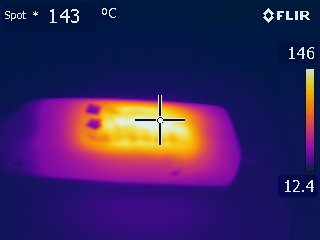
We now stand on a precipice as we look to alternative ‘green’ fuel solutions such as hydrogen, solar photovoltaics, lithium-ion batteries etc., all of which bring their unique set of risks that require understanding with a view to mitigating. For example, lithium-ion battery fires bring multiple risks, including the rapid release of toxic gases, high temperatures that can ignite local combustible materials and sometimes the projection of individual cells that can cause further pockets of fire. If we do not act now then the incidents of fires involving new technological solutions will only increase further with time, leading to a proportionate increase in fire injuries and fatalities as well as greater losses associated with fire damage.
We need to consider what options are open to us at present and what risks they bring during their entire life cycle from: infrastructure to produce energy, generating the energy, transporting/storage of energy, usage of that energy and eventually re-use, re-purpose or safe disposal of associated equipment. It is, of course, important to consider what happens in a fire during any of these stages. This relates not just to fires caused by those technologies but fires in which those technologies may be present.
Additionally, how these solutions are used and stored is also worth considering. For example, it is now common for electric vehicle parking stations to be close to entrances/exits to encourage and support their greater use. More reliable data is required to understand whether electric vehicles are more likely to cause fires than petrol or diesel cars, especially with time as electric vehicles in use become older and components break down. However, it is clear that in the event of a fire involving electric vehicles the fire would burn at higher temperatures and spread much faster. This could potentially lead to greater losses in terms of more vehicles being involved, as well as greater damage to the surrounding structure, e.g. car park, and leads to additional problems such as the exits being blocked to prevent escape. Such fires require a lot more water to put out, leading to more water damage of the building/contents and greater contamination of water run off with the additional challenge that the battery cells can also re-ignite later.
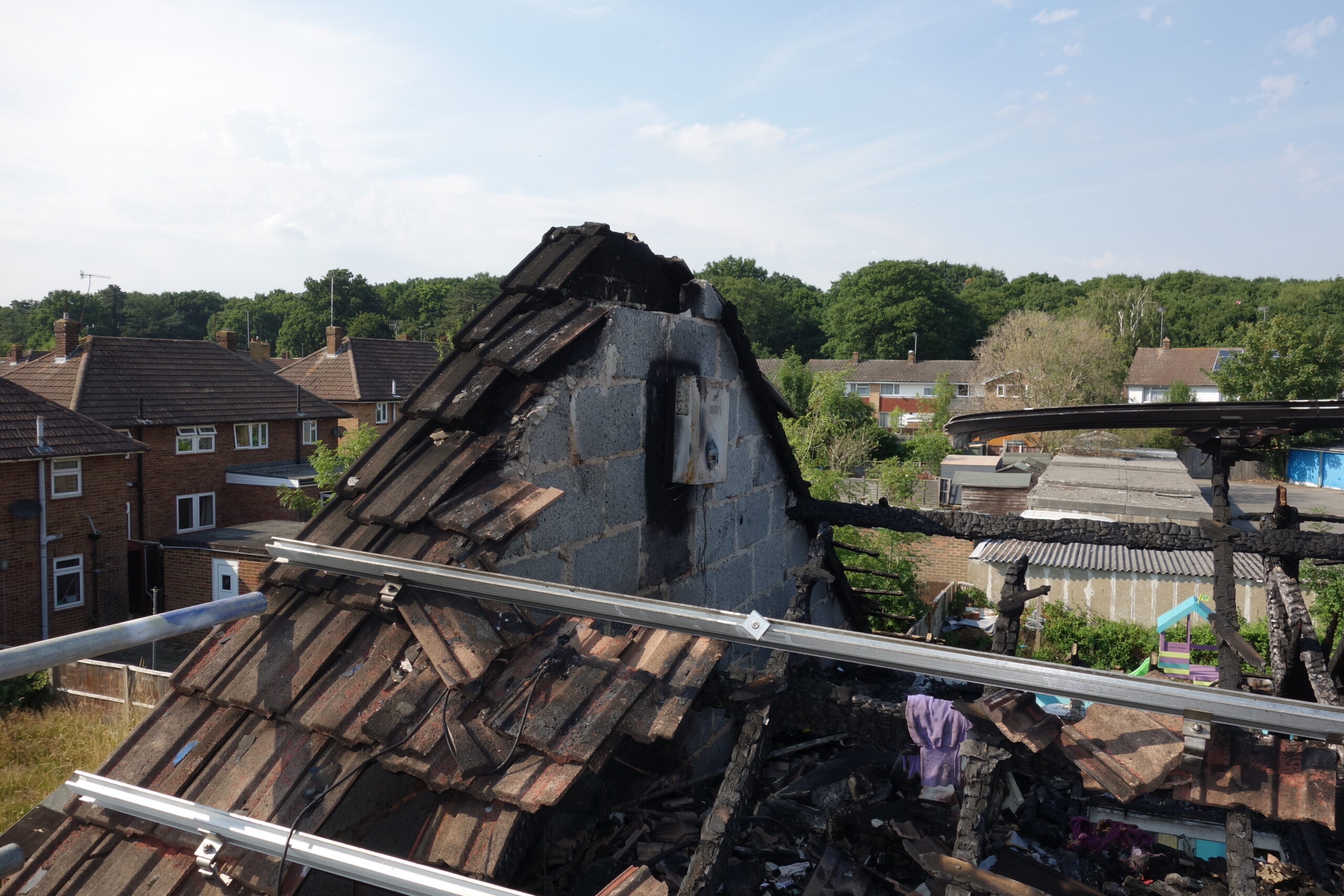
On the theme of water run-off it is also worth noting that throughout the world water is used to put out fires involving solar photovoltaic panels, which results in environmental contamination as the toxic particulates are released into the air and as water carries them away. Whilst light remains present the solar panels will continue to produce electricity and they can’t be switched off remotely. Will we really continue to use water in the future to put out fires on such products that produce electricity, increasing the chances of users and fire and rescue service personnel being electrocuted?
As solar installations on the roofs of domestic premises age, the components most likely will degrade with exposure to the elements. It would be reasonable to expect aging components such as wiring, connectors or panels to cause fires which will only increase in the coming years, as the quantity of active aging stock increases. There is no fire detection installed above the roof, where the panels are installed, so how will occupants know their roof is on fire and at what point will they find out? How far will the fire have progressed and what losses will have been incurred? If we presume a tiny fraction of all installations will lead to a fire and a small fraction of those lead to a fatality, it might seem like a very low probability overall, but when you consider the sheer number of installations in place, only increasing with time, the likelihood of fatalities in such fires becomes concerning. Should we not be working on solutions, such as integral fire detection for solar panels used in domestic premises, now?
On the theme of anticipated increases in fire incidents involving solar panels used in domestic premises is it also worth exploring how we can proactively monitor fire-safety data so that increasing trends of fires associated with new technologies can be automatically and continuously monitored and reported? For example, data detailing fire incidents, completed by fire and rescue services on their electronics systems, could automatically flag when pre-set criteria are met, such as the increasing incidents of reports containing specific terms, e.g. solar, batteries. Could this and relevant data from other sources be used together with data analysis technology to potentially predict future fire events or specific technologies at increased risk? Social media could then be used to inform the public, as it has been proven to be an effective way to reach a wide audience.
Social media has proven to be effective in getting the message across as there are many videos on social platforms of electric vehicles, such as e-bikes and e-scooters, being charged inside homes, that catch fire. It is shocking to see the speed at which the fire takes hold and of the resulting vapour cloud that make it challenging for occupants to get out. Very quickly the escape route is blocked by the fire, the smoke prevents them from seeing or makes them disorientated and this all happens whilst toxic gases are potentially being inhaled. It would be wrong to say that lithium-ion batteries are unsafe as they have been safely used in electrical appliances such as consumer electronics, power tools and toys for decades. They present a greater challenge as users of e-bikes and e-scooters often use incompatible, unregulated or cheap internet-sourced batteries or chargers and then charge these vehicles in escape routes.
There are many risks that need to be understood and mitigated now as we will increasingly rely on these technologies and solutions in the future. As discussed earlier, there are many cases of technological and innovative products being developed and introduced as commercial solutions without the necessary evidence to support their safe use. Solutions today are often way ahead of standards and codes meaning that they can’t be effectively tested, approved and regulated. The time is takes to research capabilities of new technologies, develop testing methodologies that support a test standard, develop a testing and certification service and then test and approve products, in the past has taken years. This approach has proven to be effective in terms of resulting in robust fire-safety products fit for the service environment and has the flexibility to adapt to incremental changes in technologies. However, a means to speed up this process is needed now more than ever considering the rapid growth of different solutions, all evolving at different rates.
By engaging collaboratively now, the solutions that are being developed or available in the market can be investigated to understand the risks present, how they can be mitigated and how these solutions can best be used. Whilst this article does not offer much in the way of solutions, it does highlight some of the key things that we need to consider now, to ensure that we can respond quickly and appropriately to the fire risks that emerge in the future as we journey towards our target of net zero.
For more information, go to https://bregroup.com/expertise/safety-security-fire/fire-safety-research
About the Author

Principal Consultant (Fire Safety) at BRE.
