

At Fomtec, our mantra is ‘Data, Not Opinions’. We recognize our ongoing responsibility to the industry to provide accurate, data-driven information. The Enviro Programme recently completed its 3,000th fire test, and we are committed to continuing our rigorous testing efforts. This will ensure that safety margins remain valid and achievable in real-world applications. This article will thoroughly explain Fomtec’s commitment to pushing the boundaries of foam testing during the transition to SFFF.
Why do we test?
The role of the R&D Chemist is to develop foam concentrates that pass a test… or is it? Shouldn’t the primary goal be to develop foam concentrates that are effective firefighting agents? The two objectives are closely linked. An effective foam concentrate will pass the test and be successful as a firefighting agent. Testing is the best way to evaluate its performance as a firefighting agent.
Since fire-performance tests need to be repeatable, cost-effective and controlled, the key question is how well a test protocol scales to real-world scenarios. For example, can a 4.5m2 test pan be used to represent a full-surface fire on a 120m storage tank?
In a perfect world, all tests would be made under real-life conditions. To get the closest possible to this, a test procedure needs to consider scalability, repeatability, cost-effectiveness and how close it is to the real-life mission and/or application. Test procedures are typically developed by standards committees or stakeholders within a specific industry.
Due to the varying requirements across different missions or applications, multiple test procedures exist. Common test procedures for Class B foams include UL 162, FM 5130, and EN 1568, which are geographically specific, as well as ICAO, IMO 1312, LASTFIRE and US MIL SPEC, which are more application focused.
The importance of safety margins
Test fires are relatively small-scale and typically conducted using application densities set above the critical application density but below the levels defined by design standards. The difference between these test densities and design densities constitutes our safety margin. But what variables are these safety margins intended to cover?
- The type of fuel involved in the fire can significantly impact the effectiveness of the foam concentrate.
- Ambient conditions, such as temperature and humidity, can alter the performance of the foam.
- The quality of water used in the foam mixture can vary.
- The foam concentrate itself may degrade or change as it ages, which could affect performance.
- Different types of discharge devices may deliver the foam in varying patterns and amounts, influencing how well it covers and suppresses the fire.
- There are inherent physical differences between a controlled test pan fire and an actual fire in the real world.
- The quality of foam generated during a test may differ from what is produced in actual firefighting situations.
- The foam’s compatibility with dry chemical agents and other firefighting substances can affect its overall performance.
- The technique used by the operator can also have an impact.
For PFAS-containing foam concentrates, safety margins are supported by over 50 years of experience and data. Design standards, such as NFPA 11 or EN 13565-2, incorporate these safety margins into their application guidelines. As we transition to SFFF, we observe varying approaches to performance testing from authorities like UL, FM, ICAO, EN, along with a completely new U.S. Military Specification for fluorine-free foam.
Test standards must ensure both repeatability and relevance to the specific mission where the foam will be used. This mission-specific focus necessitates moving beyond standard testing to explore the limits of performance, backed by data to support recommendations.
The fuel variable
Since foam was first introduced as a firefighting agent, we’ve had to address the challenges posed by different fuel types – specifically, water-immiscible and water-miscible fuels. This led to the development of foams tailored for hydrocarbon fuels and what are now known as ‘alcohol-resistant’ foams, capable of handling both water-immiscible and water-miscible fuels. This distinction remains important with SFFF, although most formulations from manufacturers today are alcohol-resistant by default.
Beyond the type of foam, we’ve historically used reference fuels to represent broader groups of chemicals – for example, Heptane for hydrocarbons, Acetone for ketones and Isopropyl Alcohol (IPA) for alcohols. In the latest version of FM 5130 for SFFF, Factory Mutual (FM) has taken a more nuanced approach by introducing approvals for hydrocarbons based on their flash point and vapour pressure relative to Heptane, as well as for fuel blends, such as gasoline. At Fomtec, we fully support this methodology and have conducted tests with various fuels, including Jet A-1, Hexane, Hexane blends, plant-based hydrocarbons and different gasoline blends.
The situation with water-miscible fuels is even more complex due to the vast number of different chemicals involved. Testing every single chemical is not only impractical due to their sheer number but also because some pose significant life-safety risks. Fomtec encountered these challenges early on when we assessed performance with Methyl Ethyl Ketone (MEK) and Ethyl Acetate, both of which we refer to as ‘foam destroyers’ due to their tendency to degrade foam effectiveness rapidly.
Fomtec’s data-driven approach to water-miscible fuels
The challenges posed by MEK prompted Fomtec to launch a data-driven project aimed at better understanding foam performance with water-miscible fuels. Over a two-year period, Fomtec conducted laboratory tests on more than 200 chemicals. This extensive testing generated comparison data relative to the physicochemical characteristics of these chemicals, allowing Fomtec to develop an analytical modelling tool that assesses gel formation and foam degradation.
This tool was then validated against fire-test results to ensure its accuracy in predicting fire performance. With this tool, Fomtec can now evaluate a client’s specific fuels and predict the performance of Enviro foams without the need for fire testing. While the tool has demonstrated high reliability, there are still certain fuels that fall outside its predictive range. In such cases, Fomtec resorts to the original lab-scale testing methods used in the tool’s development.
The holistic approach
The foam qualities (FQ) of expansion ratio and 25% drain time have always been critical factors influencing the fire performance of firefighting foam. This is even more crucial with SFFF, where the foam blanket is solely responsible for suppressing and extinguishing the fire. Understanding the range of foam qualities that can achieve the desired outcome is essential. However, the issue with single-point data, such as that obtained from EN 1568-3 and -4 testing, is that it only provides fire performance data for one test nozzle, at a specific pressure and flow rate, generating a single expansion ratio and 25% drain time point. Even with the proposed updates to this test standard, the current drafts only address variations in expansion ratio, which Fomtec views as a missed opportunity.
Fomtec believes that the approach taken by UL and FM for topside Type II and Type III testing is more appropriate. In these tests, the foam qualities used must match those achieved with real-world discharge devices. Some have noted the different test densities applied with SFFF compared to AFFF, but it’s important to recognize that the application density and duration for SFFF are the same as those for non-film-forming fluorinated foams like FP.
Additionally, UL has made a significant change with SFFF testing, requiring that listings with Type II devices, such as foam chambers and foam makers, must be conducted separately from the Type III direct application tests used for hose and monitor nozzles.
By fire-testing foam with various qualities captured from real-world discharge devices, under minimum and maximum flows and inlet pressures, this critical variable is converted into a known variable. This means that the safety margin no longer needs to account for it. However, safety margins applied by some design standards cannot compensate for a complete lack of data related to foam qualities and non-aspirating discharge devices.
Advancing fire testing practices
While many variables that impact foam performance and safety margins can be addressed within standard fire-performance tests – using different fuels, water types, foam qualities and discharge devices such as foam-water sprinklers – it’s crucial to continually evaluate the correlation between these standard tests and larger, real-world scenarios. This data is essential as we transition away from PFAS-containing foams.
At Fomtec, we believe the entire industry has a responsibility to conduct thorough testing to gather this critical data. To this end, Fomtec is dedicating increased time and resources to expand our testing efforts. Over the past 12 months, our testing initiatives have included:
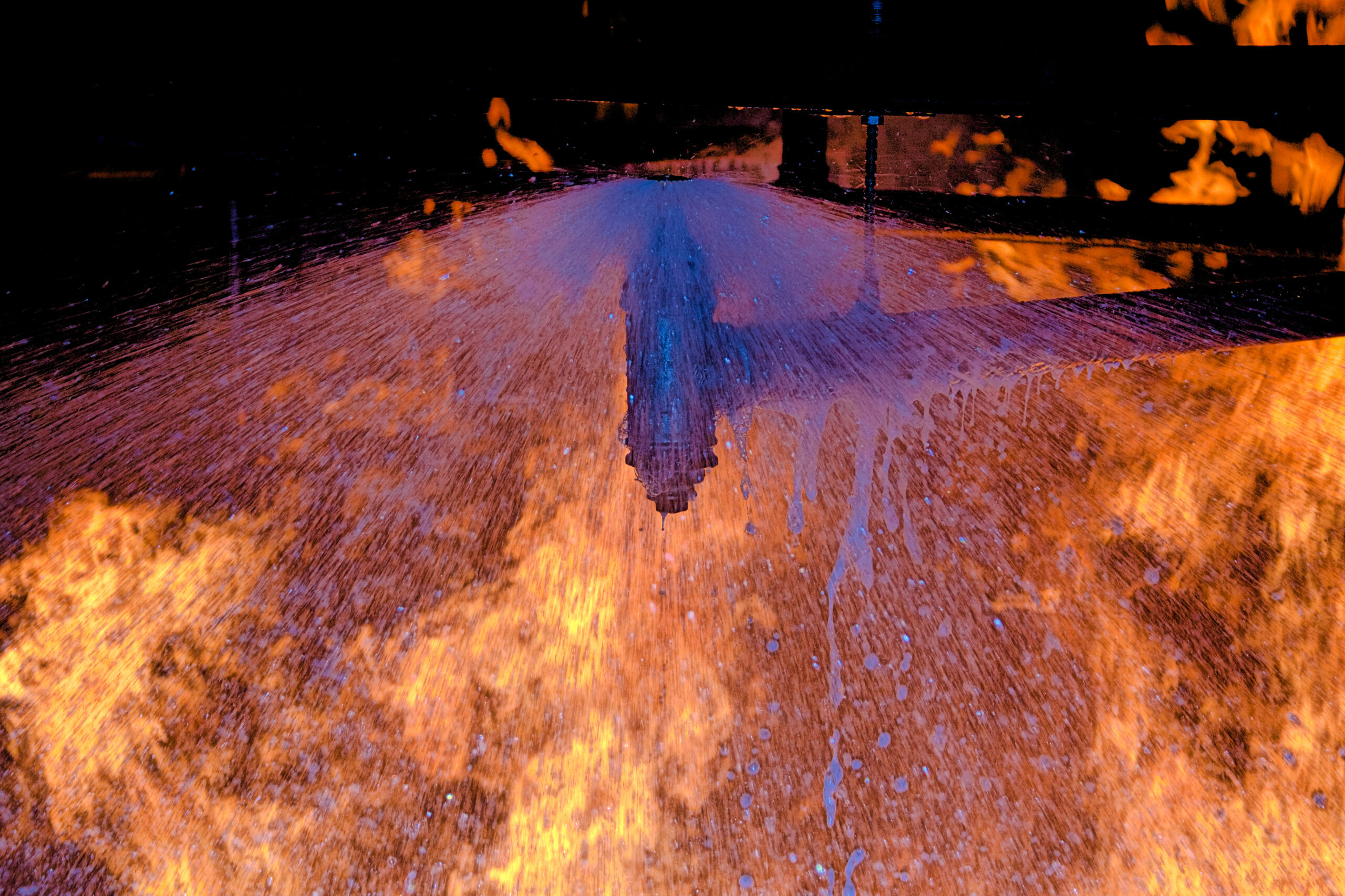
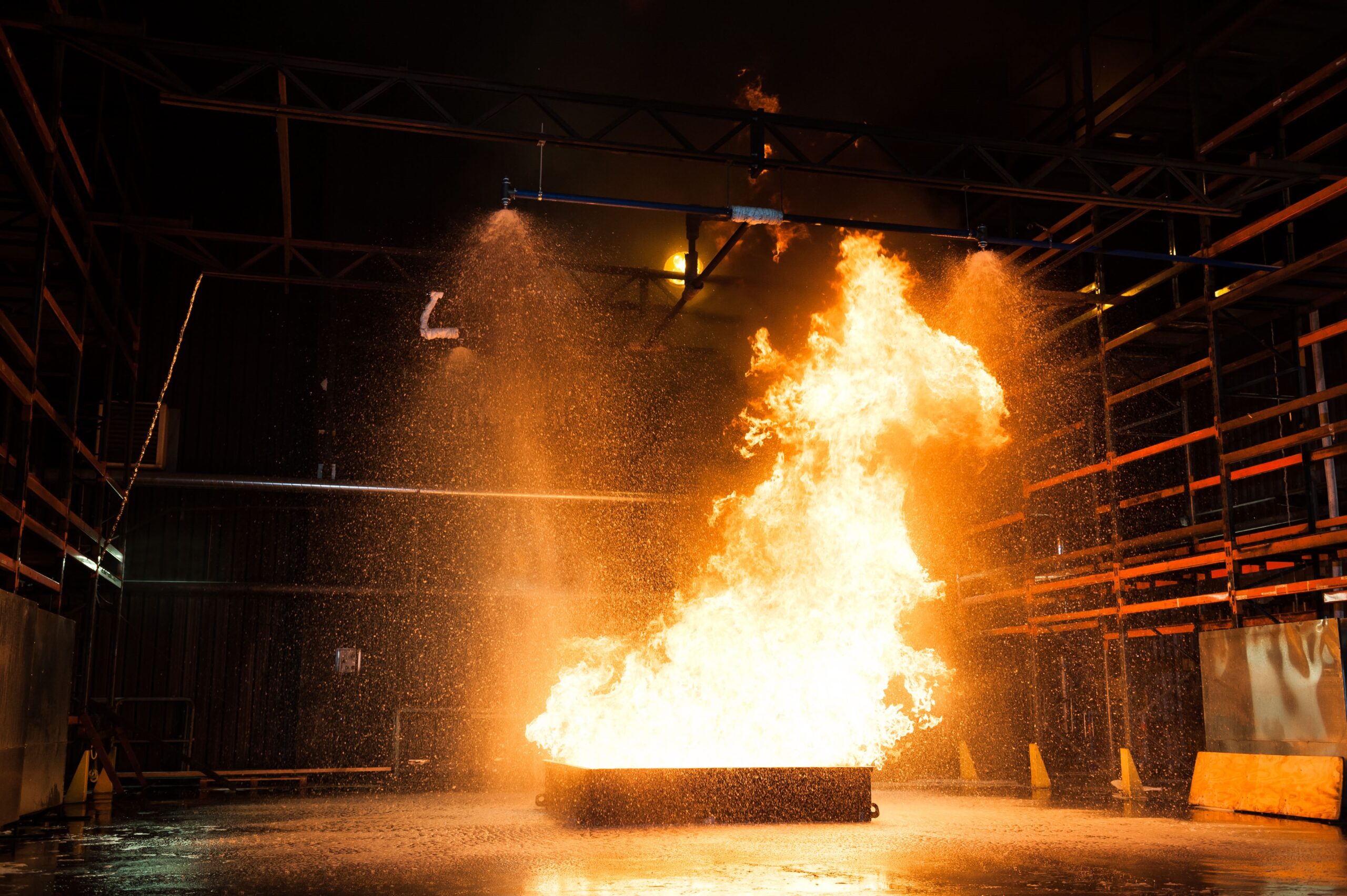
- Testing Enviro USP with standard sprinklers: We conducted tests with sprinklers at approximately 14m in height on jet fuels to verify application density, as most hangars exceed the roughly 4.5m test height used under UL standards.
- 12-head test grid with GESIP and LASTFIRE: We established a test grid and pan to evaluate aspirated heads in a loading rack fire scenario, using 3,000 litres of gasoline and an application density of 0.16gpm/ft² (6.5lpm/m²).
- Large fire testing with LASTFIRE: We participated in testing Enviro USP on large fires using handlines and a simulated full-surface tank fire. This was conducted with an over-the-top Type III application method on gasoline.
Testing at IRIS in Beaumont, Texas: We tested Enviro foams on a 13m-diameter test pan at application rates of both 0.08gpm/ft² and the NFPA 11 minimum recommended rate of 0.16gpm/ft².
